The proof of return
How Does Antinous Die in the Movie vs. Homer?
The short answer
In the film, Antinous dies after a prolonged physical confrontation with Odysseus, making their rivalry a climactic personal reckoning. In Homer, Odysseus kills him suddenly with the first arrow of the slaughter: Antinous is raising a cup when the shaft strikes his throat, before the suitors understand that judgment has begun.
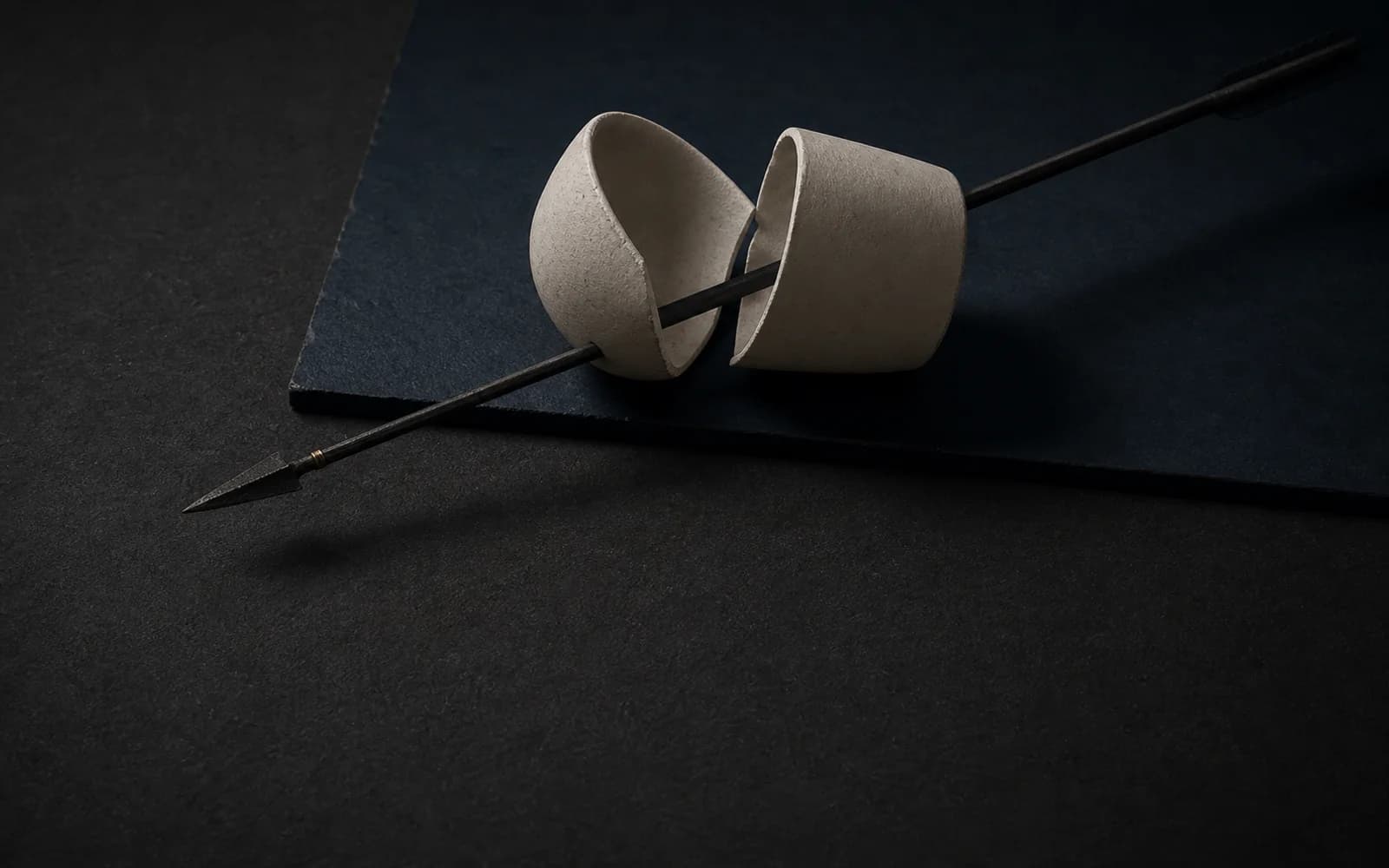
Objects remember what disguises hide.
Scar, bow, bed, pin, and household detail make identity visible through signs another person can test.
Updated August 1, 2026
Four things to hold onto
- The film delays Antinous' death into an extended final confrontation.
- Homer makes Antinous the first suitor killed.
- The poem's weapon is Odysseus' bow, not a conventional duel.
- Antinous dies before he can recognize or negotiate with the returned king.
Antinous dies at Odysseus' hands in both versions, but the deaths have opposite rhythms. The film builds a personal confrontation. Homer kills Antinous before he knows that a confrontation has begun.
That change turns the leading suitor from the first shocked victim of the bow into a final opponent who can carry more of the adaptation's political conflict.
Antinous' death in the film
Post-release accounts describe an extended struggle between Odysseus and Antinous during the final palace violence. Antinous' death arrives as a climactic settling of their rivalry rather than the first instantaneous break in the room's confidence.
The film has expanded Antinous beyond his Homeric function. He carries additional military and political pressure, making his challenge to the household more directly comparable with Odysseus' claim to rule.
His delayed death therefore gives the final act a recognizable antagonist structure. The audience remains focused on the contest between two men who represent rival futures for Ithaca.
The surrounding sequence is explained in the movie ending guide. The exact point here is structural: the adaptation makes Antinous a climactic opponent.
Antinous' death in Book 22
Homer begins with the bow. Odysseus has completed the contest that none of the suitors could master, then turns the weapon toward them.
Antinous is lifting a drinking cup when Odysseus sends an arrow through his throat. The cup falls, blood spills across the food, and the other suitors leap up in confusion.
They do not immediately understand that the beggar is Odysseus. They look for weapons and accuse him of a disastrous accident.
Only then does Odysseus reveal himself and list their offenses: consuming his property, pursuing his wife, abusing his household, and acting without fear of divine or human consequence.
Antinous cannot answer. His death precedes recognition.
Why the bow matters
The bow is more than a weapon that happens to be nearby. Penelope has made it the instrument of the marriage contest, and only Odysseus can string it and shoot cleanly through the axes.
When the contest becomes an execution, the object of recognition becomes an object of judgment.
The bow-contest comparison follows that transformation in detail. It also explains why changing the sequence changes more than action choreography.
A duel gives Antinous time and status as a combatant. Homer's arrow denies him both. He is not meeting Odysseus in an agreed contest; he is being punished by the returned master of the house.
Why Antinous is first in Homer
Antinous has repeatedly acted as the suitors' most forceful leader. He promotes the ambush against Telemachus, abuses the disguised Odysseus, and represents the group's willingness to convert hospitality into seizure.
Killing him first decapitates the suitors' leadership. It also exposes how dependent their confidence was on a shared assumption that Odysseus would never return.
Eurymachus immediately tries to isolate blame. He says Antinous was responsible and offers repayment. Odysseus refuses.
That exchange clarifies the poem's theory of collective guilt: Antinous may lead, but the other suitors participated and benefited.
What the film gains and loses
The film gains a sustained personal reckoning. Antinous can embody a rival political order, and his final resistance gives the battle a human center.
It also lets the actors register recognition and resistance across time rather than inside the single irreversible instant of an arrow strike.
It loses some of Homer's shock. In the poem, the room changes before anyone has time to revise his role. A feast becomes a killing ground in one arrow flight.
It also changes recognition. Homer's Antinous dies without fully encountering Odysseus as the returned king. The surviving suitors must process that identity after their leader has already fallen.
The film's longer confrontation lets antagonist and hero occupy the same dramatic present. That is effective cinema, but it is not the same moral geometry.
The concise comparison
In Homer, Antinous is first, seated, drinking, and unaware. Odysseus kills him with an arrow through the throat.
In the film, Antinous lasts into an extended physical confrontation and dies as the leading opponent in the climax.
Both deaths end his claim on Penelope and Ithaca. Homer's version emphasizes sudden judgment and the power of the bow. The film emphasizes personal rivalry and the cost of winning.
For the cast, alliances, and palace conflict before this moment, the free guide supplies a compact route through the story.
Classics RediscoveredThe Odyssey Companion
We make the classics readable for modern adults. Independent and unofficial — every quotation is checkable by book number against Homer's text. Questions? hello@odysseycompanion.com
Free reading preview
Take the route, names, and recognition scenes with you.
Get the one-evening guide and a designed preview from the complete edition. Useful on its own; clear about where to go next.
Questions people ask
Who kills Antinous?
Odysseus kills Antinous in both versions. The difference is staging: the film builds a prolonged confrontation, while Homer uses a sudden arrow at the start of the hall slaughter.
Why is Antinous killed first in Homer?
He is the most aggressive leader among the suitors and a principal author of the plot against Telemachus. His abrupt death removes the group's apparent center before the others understand the threat.
Does Antinous know the beggar is Odysseus?
Not before the arrow strikes in Homer. The suitors initially think the shooting may have been accidental; Odysseus then reveals himself and states the charges against them.
Keep reading
The Odyssey Movie Ending Explained (vs. the Poem)
The Odyssey movie ending, explained: the pin that replaces the bed test, Telemachus crowned, the exile Nolan chose instead of Homer's truce — checked against the poem.
Read →
Who Is Antinous in The Odyssey?
Antinous's role in the Odyssey explained: the most openly violent suitor plans Telemachus's death, abuses the disguised Odysseus, and dies first.
Read →
Nolan's Bow Contest Scene vs. Odyssey Book 21
How the bow contest works in Odyssey Book 21, why stringing matters more than strength, and what to inspect in Nolan's screen version.
Read →
The Suitors Battle in the Movie vs. Odyssey Book 22
How the slaughter of the suitors unfolds in Odyssey Book 22, who helps Odysseus, and which violent aftermath the movie changes or omits.
Read →