Back to the source
Should You Read Daniel Mendelsohn's Odyssey After the Movie?
The short answer
Read Daniel Mendelsohn's Odyssey after the movie if you want to slow down and hear more of Homer's formal pressure. His translation uses an expansive six-beat English line, follows the Greek line by line, and comes with substantial introduction, notes, and commentary. It is less streamlined than Wilson, but unusually well suited to readers who want the film to begin a serious study.
The film ends. The reading begins.
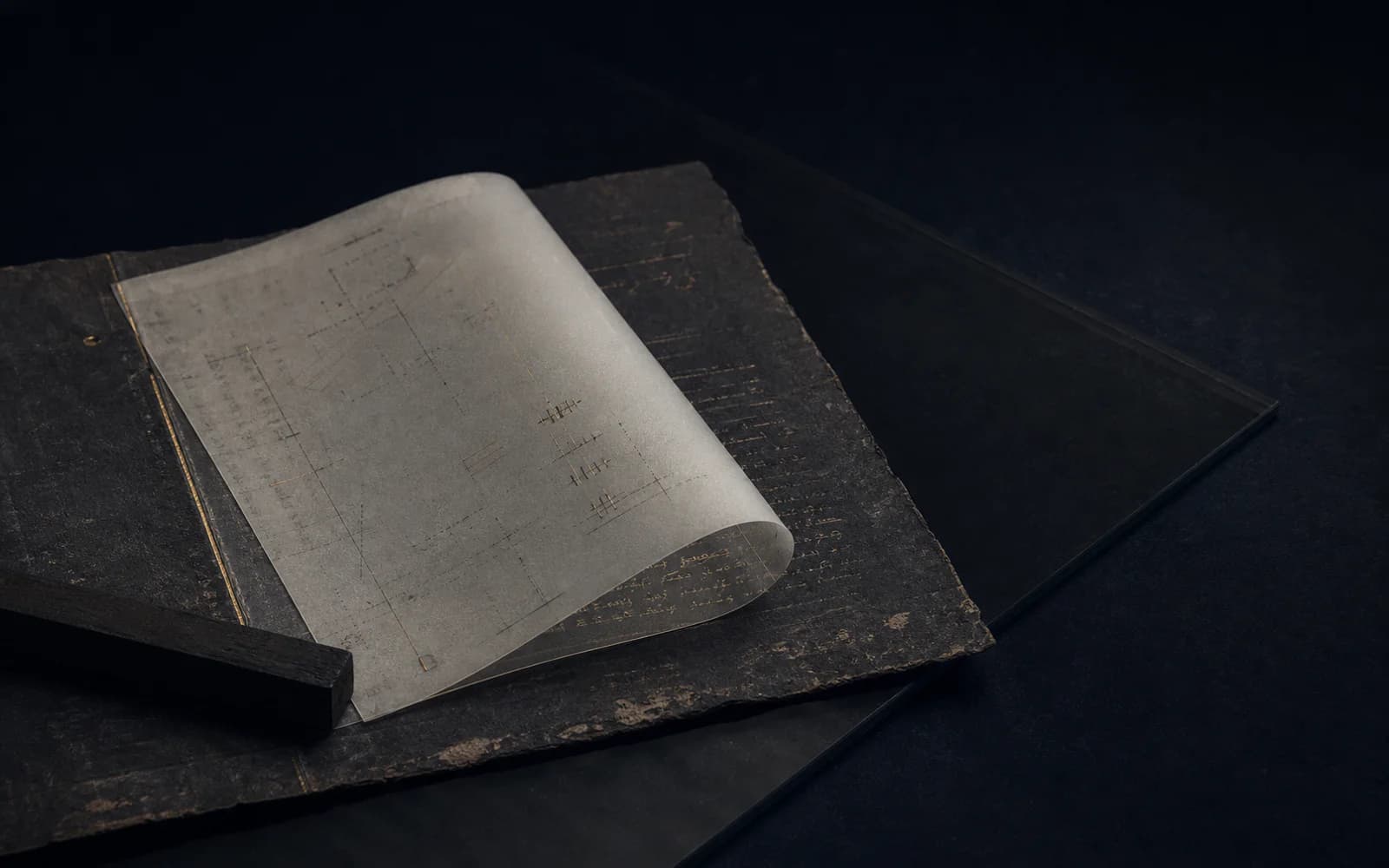
A marked passage, an open book, and a workable route turn recognition on screen into a deeper encounter with Homer.
Updated August 1, 2026
Four things to hold onto
- Mendelsohn emphasizes meter, sound, syntax, and line-by-line correspondence.
- The edition offers unusually substantial explanatory material.
- The self-narrated audiobook lets readers hear the translator's own pacing.
- It is best for attentive reading, not necessarily the fastest first completion.
Complete digital edition
Read the whole poem without losing the route.
Designed PDF and EPUB, book-by-book guidance, 120+ notes, five essays, the journey map, and character cards in one download.
Daniel Mendelsohn's translation is the best post-film choice for a reader who wants the movie to open a longer engagement with Homer. It is not designed to disappear into effortless contemporary prose. It asks you to hear line length, recurrence, sound, and the circuitous movement of Homeric thought.
That makes it a deliberate second step. If your only goal is to finish quickly, Emily Wilson may be better. If you want to discover why the poem feels different from a modern adventure narrative, Mendelsohn offers unusually strong tools.
What makes this translation different
Penguin describes Mendelsohn's governing line as an expansive six-beat English verse. The goal is not to copy Greek hexameter syllable for syllable, which English cannot do naturally, but to preserve more of its breadth and forward roll.
Mendelsohn also follows Homer's verses line by line. That discipline affects pacing. A compact phrase is less likely to be expanded across several English lines, and a long Homeric movement is not automatically compressed into short modern units.
For a post-film reader, this changes the comparison. You are no longer asking only which events were included. You begin to notice how speeches accumulate, how repeated language creates expectation, and how a scene delays its decisive word.
The screen gives a finite performance. Mendelsohn makes the written poem feel like a performance with room to breathe.
The apparatus is part of the recommendation
This edition is not only a translation. Penguin identifies an extensive introduction and unusually full notes and commentary.
That matters after a movie because curiosity is often specific. You may want to know why Athena appears in a certain disguise, why a host asks questions only after feeding a stranger, or why a recognition scene turns on an ordinary object. A useful note can answer that question without requiring a separate scholarly library.
The risk is interruption. If you read every note at first encounter, you can turn a voyage into a sequence of detours.
Use a two-pass method:
- Read a book continuously, marking only questions that affect comprehension.
- Return to the notes after the book and investigate the questions that still matter.
This preserves narrative force while using the apparatus as a second layer.
Our annotated edition guide compares editorial apparatus. The wider post-film translation guide helps if you are still choosing among Mendelsohn, Wilson, and Fagles.
Who should choose Mendelsohn
Choose this version if at least two of these statements sound like you:
- You want to hear an English approximation of epic amplitude.
- You enjoy introductions and textual notes.
- You are likely to reread individual books instead of racing once through all twenty-four.
- You want a book that can support a class, reading group, or extended personal study.
- You are interested in translation decisions as decisions.
Do not choose it because it is newer or because you assume a recent translation must be closer to a recent film. Publication date does not create an official relationship between two independent adaptations.
Mendelsohn's own post-release writing is useful because he is both translator and critic. It should still be read as an argued interpretation, not as privileged access to Homer's single correct meaning.
The audiobook changes the case
Penguin lists Mendelsohn as the reader of his own translation. That is a meaningful advantage.
A translator-narrator can reveal the intended measure of a long line, the weight of repeated phrases, and the relation between syntax and breath. You hear where the English wants to turn instead of having to infer every turn from typography.
The audio edition is long enough to require a plan, but it works well in alternation with print:
- listen to one book;
- reread one crucial exchange on the page;
- consult notes after the scene;
- write one sentence about what the film memory emphasized differently.
That hybrid method keeps audio from becoming background and notes from becoming homework.
Where the version pays off most
Mendelsohn's formal priorities are especially rewarding in speeches and recognitions.
Read Book 5 for Odysseus on Calypso's island, Book 6 for his approach to Nausicaa, Book 9 for his self-narration, Book 11 for the dead, and Books 19 and 23 for Penelope's testing intelligence.
These are not simply plot stations. They depend on how long a speaker delays, qualifies, remembers, or withholds.
The poem's repeated language can initially look inefficient to a modern reader. In a line-conscious translation, repetition becomes structural memory. The phrase returns changed because the circumstances around it have changed.
Who will get the most from Mendelsohn
Mendelsohn is not the automatic choice for every movie viewer. It is the strongest choice for the reader who wants the adaptation to become an entrance into form, sound, and commentary.
Choose Wilson if you need faster propulsion. Choose Fagles if you want broad dramatic voice and an acclaimed actor-led audiobook. Choose Mendelsohn if you want to hear the length of Homer's thinking and have enough notes to keep following it.
The deeper reward is discovering what only a long poem can do with recurrence, delay, and remembered speech, well beyond a list of changes made for the screen.
Classics RediscoveredThe Odyssey Companion
We make the classics readable for modern adults. Independent and unofficial — every quotation is checkable by book number against Homer's text. Questions? hello@odysseycompanion.com
Questions people ask
Is Mendelsohn's Odyssey difficult?
It is readable, but its longer six-beat line and formal attention ask for more patience than a streamlined contemporary version. The notes make difficult contexts easier even as the verse remains deliberately ample.
Does Daniel Mendelsohn narrate the audiobook?
Yes. Penguin lists Mendelsohn as both translator and reader of the audio edition.
Is Mendelsohn better than Emily Wilson after the movie?
It depends on purpose. Wilson is the stronger default for speed and clarity. Mendelsohn is stronger for readers who want formal texture, extensive commentary, and a slower study experience.
Keep reading
What to Read After The Odyssey (Film or Poem)
What to read after The Odyssey, film or poem: the poem itself, the Iliad, Wilson and Fagles, Circe and The Penelopiad, then Virgil's Aeneid — in an honest order.
Read →
Best Odyssey Translation for First-Time Readers
Wilson, Fagles, Fitzgerald, Lattimore, or Butler? An honest comparison of the five major Odyssey translations — and which to read for the 2026 film.
Read →
Best Odyssey Translation After Nolan's Movie
A post-film guide to choosing Wilson, Mendelsohn, Fagles, or an annotated edition according to what you want to recover from Homer's poem.
Read →
Best Annotated Odyssey Edition for Movie Viewers
How to choose Wilson's Critical Edition, Mendelsohn, Fagles, or a complete companion system for film-to-poem reading.
Read →