The modern reader
How Many Pages Is The Odyssey? Length by Translation
The short answer
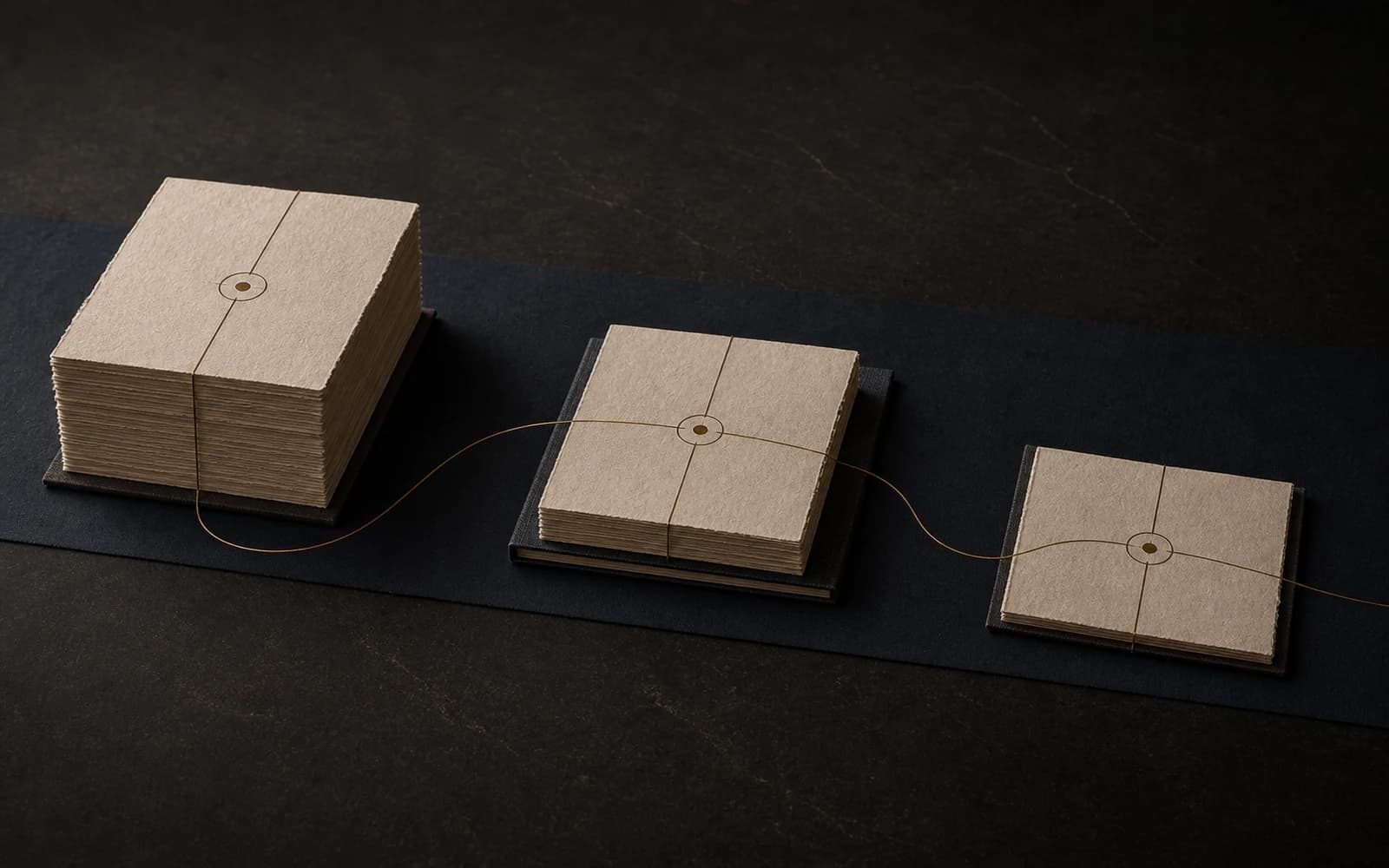
The Odyssey has no universal page count. Official publisher records list E. V. Rieu's Penguin edition at 416 pages, Robert Fitzgerald's Everyman's Library edition at 552 pages, and Robert Fagles's Penguin Classics edition at 560 pages. Each number belongs to a specific ISBN; layout, introductions, notes, and format change pagination. Compare editions by translator, publisher, and ISBN.
The right way in is the one you will keep following.
Translation, structure, names, time, and reading format are practical choices. Once the friction falls away, the poem can do its own work.
Updated July 13, 2026
Four things to hold onto
- The complete Odyssey always has twenty-four traditional books, regardless of pagination.
- Verse usually occupies more page space than dense prose.
- Introductions, notes, maps, and glossaries may add hundreds of pages.
- Check an edition's ISBN and contents before comparing its length.
There is no single answer to “How many pages is The Odyssey?” Page numbers belong to modern books; the poem predates printed pages. Two complete translations can contain the same twenty-four-book story and still differ by hundreds of pages.
Concrete ISBNs are more useful than an unsupported range. Penguin Random House lists the E. V. Rieu Penguin edition (ISBN 9780140449112) at 416 pages, the Robert Fitzgerald Everyman's Library edition (ISBN 9780679410478) at 552 pages, and the Robert Fagles Penguin Classics edition (ISBN 9780143139379) at 560 pages. These examples are publisher records for particular physical editions, not permanent totals for each translation.
What changes the page count?
Verse is set line by line and often leaves more white space. Prose fills paragraphs, so the same episode may occupy fewer pages. Trim size matters too: a large page holds more words than a small paperback page. Font size, margins, and line spacing create further differences.
Then there is material surrounding the poem. An introduction may explain Homer, oral tradition, archaeology, translation choices, and later reception. Endnotes can identify every place and minor character. Some editions print genealogies or indexes; others offer almost nothing beyond the translated text.
None of those additions makes the underlying poem longer. They change the physical edition and, often, how easy it is to use.
The measurements that stay stable
The traditional Odyssey has twenty-four books. These are sections of one epic, not twenty-four separate volumes. The Greek text contains roughly twelve thousand lines, although line totals and editorial details can vary slightly by text.
That means a reading plan built around books is more portable than one built around pages. “Read Books 1-2” works in every complete edition. “Read pages 1-35” does not.
How to compare two editions
First, match the ISBN rather than relying only on translator and title. A hardcover, mass-market paperback, and student edition of the same translation may have different pagination. Second, inspect the contents: does Book 1 begin on page 1 or after an eighty-page introduction? Third, confirm whether the text is complete, abridged, or retold.
Finally, open a sample. A shorter book is not automatically easier. Dense pages can feel slower than open verse, while good notes can save time by answering questions immediately.
Why named translations still have several lengths
A translator's name does not identify one physical book. The same English text may appear as hardcover, trade paperback, compact paperback, ebook, school edition, or volume in a collected series. Introductions can be replaced, notes expanded, and type reset while the translated poem remains substantially the same.
This is why online answers that assign one permanent page count to “the Fagles Odyssey” or any other translation are fragile. The 560-page Fagles figure above is tied to ISBN 9780143139379; another format can differ. Library and retailer records can also count Roman-numeral front matter differently from the numbered pages of the poem.
When buying or borrowing, record four details: translator, publisher, publication year, and ISBN. Then check where Book 1 begins and Book 24 ends. Those two numbers tell you how much of the physical volume is translated poem and how much is supporting material.
The supporting material is not wasted length. A useful introduction can explain oral tradition and chronology; maps and notes can prevent repeated searching. But readers comparing workload should not treat sixty pages of scholarship as if Homer added sixty pages to the voyage.
Convert the volume into a reading plan
Page totals become more useful when divided by the twenty-four books. The divisions are unequal, so do not assume that one book always means one twenty-fourth of the pages. Still, a plan based on two books per session creates twelve sessions that transfer across editions.
Another route follows narrative movements: Books 1-4 for Telemachus, 5-8 for Odysseus among Calypso and the Phaeacians, 9-12 for the wanderings, and 13-24 for Ithaca. This produces reading units whose story purpose is clearer than an arbitrary number of pages.
If you use audio alongside print, book numbers are again the shared coordinate. Audiobook track divisions and ebook “locations” vary even more than pages. The comparison of audiobook and print shows how to keep the formats synchronized without relying on pagination.
The goal is not to finish a certain number quickly. It is to choose stopping points that preserve what changed, who now knows what, and where the return has reached.
When a course assigns page ranges, confirm that everybody uses the same ISBN or convert the assignment to book numbers. Otherwise one student's page 100 may fall in Phaeacia while another's remains in an introduction. That simple check prevents an edition difference from looking like missed work.
Length is not the real obstacle
The poem's reputation can make any number look threatening. In practice, its divisions create natural stopping points, and several books move quickly once the wanderings begin. The better question is not “How many pages?” but “Which edition will keep me oriented?”
Use the guide to the twenty-four books of The Odyssey to see the shape, then choose among the best Odyssey translations. A book-by-book route makes the physical page count much less important.
Classics RediscoveredThe Odyssey Companion
We make the classics readable for modern adults. Independent and unofficial — every quotation is checkable by book number against Homer's text. Questions? hello@odysseycompanion.com
Free reading preview
Take the route, names, and recognition scenes with you.
Get the one-evening guide and a designed preview from the complete edition. Useful on its own; clear about where to go next.
Questions people ask
Why do editions of The Odyssey have different page counts?
Translators use prose or different verse forms, while publishers choose different trim sizes, fonts, spacing, introductions, and notes. Page count describes an edition, not the ancient poem itself.
Is a shorter Odyssey edition abridged?
Not necessarily. A complete prose translation with compact typography can be shorter than a verse edition with extensive notes. Look for words such as complete, unabridged, retold, or adapted, then inspect the table of contents.
Keep reading
The Best Reading Plan for Homer's Odyssey
A practical Odyssey reading plan for busy adults: what to read first, what to skim, and how to finish without losing the deeper story.
Read →
Best Odyssey Translation for First-Time Readers
Wilson, Fagles, Fitzgerald, Lattimore, or Butler? An honest comparison of the five major Odyssey translations — and which to read for the 2026 film.
Read →
How Many Books Are in The Odyssey? The 24-Part Structure
The Odyssey contains 24 books. See what 'book' means in an ancient epic and how the poem divides into Telemachus, wanderings, and return.
Read →
Is The Odyssey Hard to Read?
Is Homer's Odyssey difficult for beginners? A practical guide to what slows readers down and how to choose a readable path.
Read →
Source notes
- Homer, Odyssey, complete twenty-four-book text, Samuel Butler translation
- Encyclopaedia Britannica, Odyssey: epic by Homer
- Perseus Digital Library, Homer, Odyssey, A. T. Murray translation
- Penguin Random House: E. V. Rieu translation, ISBN 9780140449112, 416 pages
- Penguin Random House: Robert Fitzgerald translation, ISBN 9780679410478, 552 pages
- Penguin Random House: Robert Fagles translation, ISBN 9780143139379, 560 pages