Back to the source
Odyssey Translation Comparison Activity After the Film
The short answer
Compare Odyssey translations by giving students the same short passage in three legally available editions and asking how diction, syntax, names, rhythm, and ambiguity shape the scene they remember from film. The goal is not to crown a universal winner. Students should identify each version's interpretive choices, then explain which wording would support a particular screen performance and what Homeric texture that choice might lose.
The film ends. The reading begins.
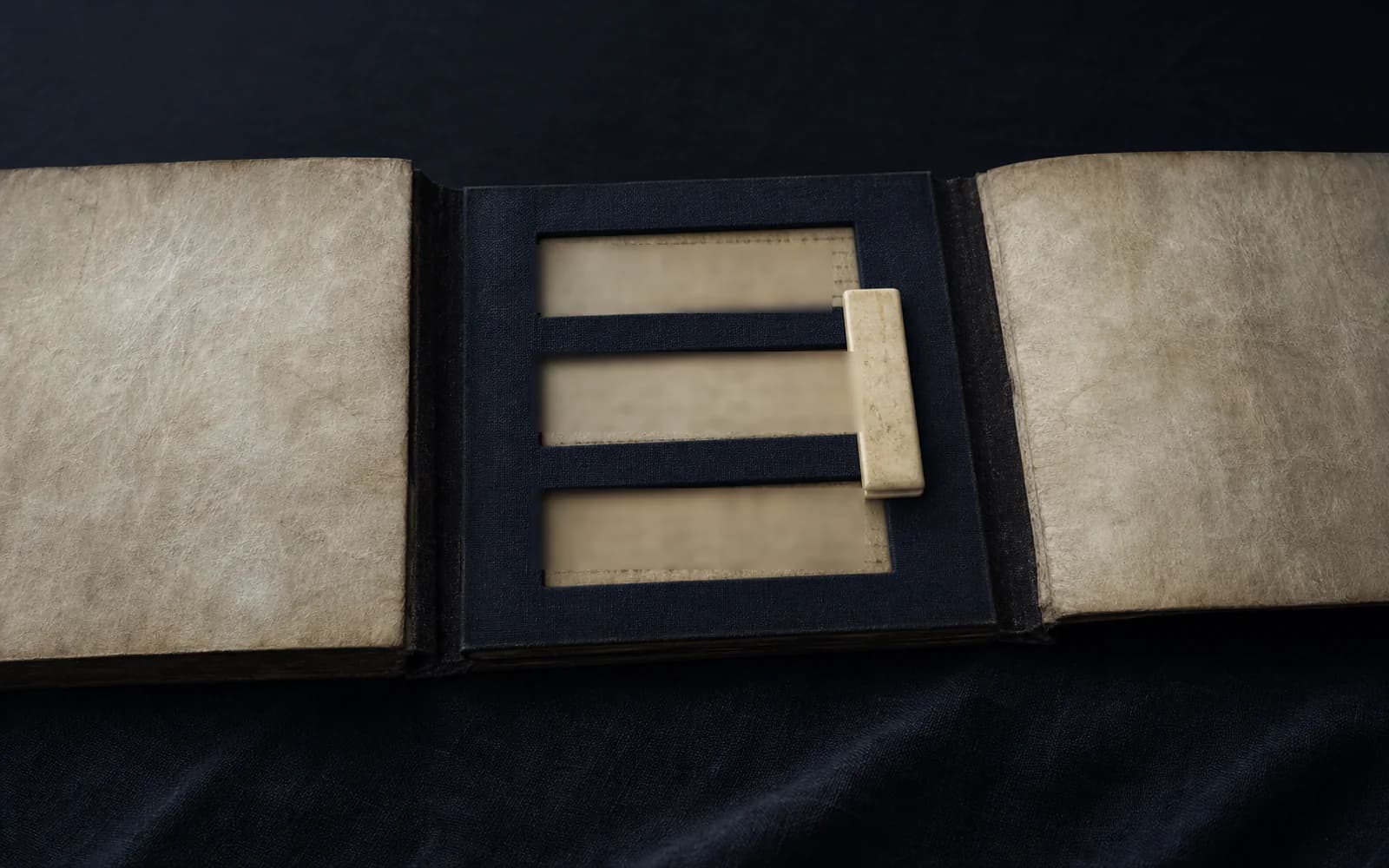
A marked passage, an open book, and a workable route turn recognition on screen into a deeper encounter with Homer.
Updated August 1, 2026
Four things to hold onto
- Every English Odyssey is already an interpretation.
- Compare one bounded passage; whole-book impressions are too diffuse.
- Track names, register, rhythm, ambiguity, and narrative speed.
- Use the film as a fourth performance, not as the correct translation.
This activity treats translation as adaptation before cinema. Students compare three versions of one passage, then decide how each version would shape a screen performance. The film becomes a fourth interpretation, not the answer key.
Select a passage with pressure
Choose 12-25 lines or a short prose equivalent from:
- the opening invocation;
- Odysseus naming himself to Polyphemus;
- Achilles on glory in Book 11;
- Penelope questioning the stranger;
- the bow-and-lyre simile;
- the olive-tree bed test.
Use editions the school may legally reproduce. Perseus/Scaife provides stable Greek and English texts, while an older translation can offer an accessible comparison point.
The prose-versus-verse guide helps students name broad formal differences before the activity.
Build the comparison sheet
Place the translations side by side without initially identifying the translators. Students mark:
- names: Odysseus or Ulysses, Athena or Minerva;
- register: conversational, ceremonial, archaic, plain;
- sentence length and order;
- repeated words or epithets;
- rhythm and lineation;
- certainty or ambiguity;
- pace.
They should not label one version "more accurate" yet.
First read: event and clarity
Ask students to summarize what happens in each version using one sentence. If summaries differ, locate the wording that caused the difference.
This reveals that clarity is not neutral. A translator may resolve a pronoun, choose a specific emotional verb, or divide a long sentence. The reader gains orientation and loses some uncertainty.
Students then rank the versions by immediate comprehensibility and explain the criteria used.
Second read: voice and status
Read each version aloud. Ask:
- How old does the speaker seem?
- Does the voice sound public or private?
- Is intelligence shown through directness, ornament, caution, or speed?
- Which social relation becomes most visible?
These impressions are interpretive, but they can be tied to diction and syntax.
The page on modern dialogue and oral tradition explains why no English accent can be the uniquely authentic voice of Homer.
Third read: rhythm and performance
For verse translations, mark line breaks and recurring stresses. For prose, mark clauses and pauses.
Ask one student to perform each version with minimal rehearsal. The class notes where breath, emphasis, or suspense changes.
Oral performance was central to the poem's history, but this classroom exercise does not recreate ancient performance. It demonstrates that wording becomes meaning through a present voice and audience.
Connect the passage to the film
Students recall or review the corresponding film scene through approved materials and complete:
Translation A would support the film's ___ because ___. Translation B would produce a different effect by ___.
They must discuss one screen element: performance, framing, sound, editing, or object emphasis.
For example, direct wording may support rapid danger, while formal syntax may make a recognition feel ritualized. Neither effect is automatically superior.
Reveal the translators
Now identify edition, date, and form. Discuss how expectations change when students see a famous modern name or an older prose version.
Record the translator, publisher, publication year, book number, and line or section system before comparing citations. Two editions may print similar wording under different pagination, so a page number alone is not enough for another reader to recover the passage.
The community translation thread in the sources demonstrates active reader demand for recommendations, not scholarly evidence that one edition is best.
Use the best Odyssey translation guide to show that recommendation depends on purpose: first reading, close study, listening, or comparison.
Group claim
Each group writes:
For this scene, Translation ___ makes ___ easiest to perceive, but it reduces ___.
Require three quoted words or a very short phrase, not a long reproduced passage. Students should cite translator, edition, book, and line or section.
Assessment
Score out of 20:
- 5: precise comparison of wording;
- 4: attention to rhythm or syntax;
- 4: connection to performance;
- 4: explanation of gain and loss;
- 3: correct citation and legal use.
Do not score a preferred translation as the right answer.
Extension: let each translation audition for the screen
Students create a two-sentence adaptation of the passage for a chosen performance context, then annotate every change.
They must explain what happens to names, formality, ambiguity, and rhythm. The exercise makes visible the same problem faced by every translator and filmmaker: a new audience needs a voice, but every voice brings its own time.
The Teaching The Odyssey hub includes broader assignments. This activity stays narrow so students can see that translation is not a transparent pipe carrying Homer unchanged. It is a designed encounter between text, performer, and listener.
Classics RediscoveredThe Odyssey Companion
We make the classics readable for modern adults. Independent and unofficial — every quotation is checkable by book number against Homer's text. Questions? hello@odysseycompanion.com
Free reading preview
Take the route, names, and recognition scenes with you.
Get the one-evening guide and a designed preview from the complete edition. Useful on its own; clear about where to go next.
Questions people ask
How many translations should students compare?
Three is usually enough to reveal meaningful differences without overwhelming the exercise. Include edition and translator information and use texts the institution may legally reproduce.
Can a prose translation be accurate?
Yes. Prose can convey event, syntax, and tone effectively, but it necessarily makes different choices about meter and pacing. Accuracy has several dimensions.
Keep reading
Teaching The Odyssey: A Practical Guide for 2026
How to teach the Odyssey using the 2026 film as a hook: a unit shape, a copyright-free translation you can copy for a class, and where students get lost.
Read →
The Odyssey in Prose vs. Verse: Which Should You Read?
Compare prose and verse translations of The Odyssey by clarity, rhythm, fidelity to poetic form, pace, and first-reader experience.
Read →
Best Odyssey Translation for First-Time Readers
Wilson, Fagles, Fitzgerald, Lattimore, or Butler? An honest comparison of the five major Odyssey translations — and which to read for the 2026 film.
Read →
How Should Viewers Read Modern-Sounding Dialogue Against Oral Tradition?
Why modern-sounding accents and dialogue are not automatically un-Homeric, and how oral performance changes the meaning of adaptation.
Read →