The route beneath
Who Is Leucothea in The Odyssey? The Veil Rescue Explained
The short answer
Leucothea is a sea goddess, formerly the mortal Ino, who rescues Odysseus during Poseidon's storm in Odyssey Book 5. She rises from the sea, tells him to abandon his breaking raft, and lends him an immortal veil to keep him afloat. Odysseus follows only when the raft fails, reaches Scheria, and returns the veil to the sea.
One more turn on the long way home.
Each book and episode changes the route, but the pressure is always the same: how to keep Ithaca from becoming only a memory.
Updated July 13, 2026
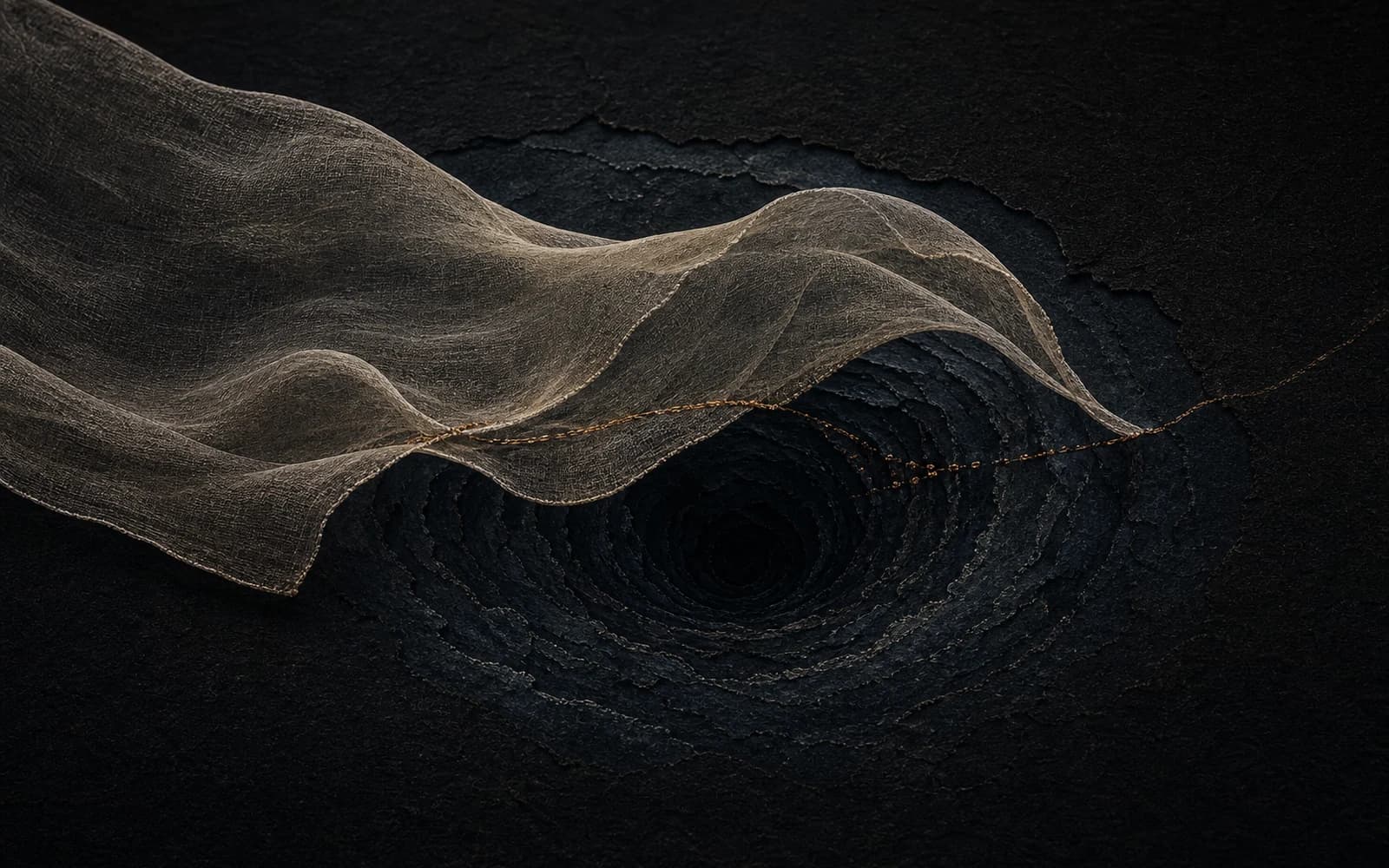
Five things to hold onto
- Homer identifies Leucothea as Ino, a mortal who became a sea divinity.
- She appears when Poseidon's storm is destroying Odysseus's raft.
- Her veil keeps him from drowning after he enters the sea.
- Odysseus initially hesitates because divine advice can conceal danger.
- He throws the veil back after reaching the Phaeacian shore.
Leucothea appears for only a short stretch of Odyssey Book 5, yet without her Odysseus may never reach the Phaeacians. Poseidon has found him at sea, shattered the confidence of his voyage, and begun tearing apart the raft built on Calypso's island. A female sea divinity rises from the water and gives the exhausted traveler one more way to survive.
Homer identifies her as Ino, daughter of Cadmus, once a mortal woman and now honored among the gods as Leucothea. The poem does not pause to tell her complete mythology. It gives what the scene requires: she recognizes Odysseus's extremity, possesses a protective veil, and knows how he must use it.
Where the rescue happens
Hermes has already delivered Zeus's order that Calypso release Odysseus. Calypso supplies tools and materials, and Odysseus builds a raft. After many days of sailing he comes within sight of Scheria, land of the Phaeacians.
Poseidon then returns from abroad, sees the man nearing safety, and raises a storm. Waves and winds batter the raft. Odysseus is thrown into the sea and struggles back aboard. The moment proves that leaving Calypso is not the same as completing the homecoming.
Leucothea sees him in this exposed condition.
What Leucothea tells him to do
She urges Odysseus to remove the clothes Calypso gave him, abandon the raft, and swim toward the Phaeacian shore. She gives him her veil to spread beneath his chest, promising protection from suffering and death in the water. Once he reaches land, he must throw it back into the sea without looking toward it.
The instructions are precise. The veil is not a vehicle that carries him effortlessly to shore. Odysseus still has to leave his last constructed shelter, swim, judge the coastline, survive the surf, and find a safe landing.
The Greek term is often translated as a veil, scarf, or immortal covering. Whatever the English noun, its narrative limits remain clear: it protects the swimmer from death in the sea, must be worn in the way Leucothea describes, and must be returned. The object is divine aid under conditions, not armor Odysseus can carry into every later trial.
Why Odysseus hesitates
Odysseus does not immediately obey. He suspects that a god may be planning harm by persuading him to abandon the raft while land remains distant. That suspicion is rational within the poem. Poseidon is actively hostile, Calypso detained him for years, and divine appearances do not guarantee transparent motives.
He chooses a conditional strategy: stay with the raft while it holds, then use the veil if the structure fails. When the waves finally break it apart, he binds the veil around himself and enters the sea.
This is not refusal of divine help. It is the practical caution of a man who combines advice with his own reading of danger.
Athena's part in the landing
Leucothea is not the only divine helper. Athena quiets most of the winds, though the sea remains dangerous. Odysseus swims for two nights and days before approaching land. Cliffs and violent surf make the first coastline lethal; a river mouth finally gives him an opening.
He prays to the river, reaches shore, and releases Leucothea's veil. The current carries it back toward the sea, where the goddess receives it. Athena then helps him find shelter under leaves and sleep.
The sequence distributes agency among gods, landscape, object, and human judgment. No one simply removes the ordeal.
Who was Ino before Leucothea?
Wider Greek traditions tell different versions of Ino's mortal suffering and transformation into the sea goddess Leucothea. She belongs to the family of Cadmus and is associated with the young god Dionysus in other myths. After catastrophe and a leap into the sea, she receives divine status.
Those stories explain why Homer can introduce her as someone “formerly mortal” without expanding the biography. Ancient audiences could recognize the name, while the Odyssey uses only the aspect relevant to a sailor at the boundary between death and land.
Her earlier mortality also distinguishes her help from the distant decisions of Olympian council. Leucothea knows a passage from mortal suffering into marine divinity and recognizes a man nearly erased by the sea. That resonance is interpretive rather than a statement the narrator explains, but it helps account for why later readers have given the brief rescuer sustained attention.
Why the veil matters
The object has a limited purpose and must be returned. Odysseus cannot keep divine protection as permanent equipment. Calypso's clothes and raft belong to the island he is leaving; Leucothea's veil belongs to the sea; when he meets Nausicaa in Book 6, he arrives with no possession and no visible status.
That dispossession prepares the Phaeacian episode. Odysseus must win help through judgment, speech, and the rules of hospitality rather than displaying wealth or royal insignia.
The veil's return prevents the rescue from becoming a possession-based proof of identity. When Odysseus later tells the Phaeacians about the storm, he has no divine token to display. His account must be judged through its coherence and through the condition in which Nausicaa found him.
A rescue at the threshold
Leucothea intervenes between captivity and social return. Calypso's island held Odysseus outside ordinary mortal time; Scheria will restore him to storytelling, feasting, ships, and human hosts. The veil makes passage across that final deadly margin possible, but it does not spare him the vulnerability of arriving naked and unknown.
Read the full sequence in the Book 5 summary, place the storm on Odysseus's journey map, and compare Leucothea's brief aid with the longer contest between Athena and Poseidon. Her scene is small, exact, and indispensable.
Classics RediscoveredThe Odyssey Companion
We make the classics readable for modern adults. Independent and unofficial — every quotation is checkable by book number against Homer's text. Questions? hello@odysseycompanion.com
Free reading preview
Take the route, names, and recognition scenes with you.
Get the one-evening guide and a designed preview from the complete edition. Useful on its own; clear about where to go next.
Questions people ask
Who saves Odysseus from drowning in Book 5?
Leucothea gives him the veil and the instructions that let him survive in the water; Athena then restrains the winds and helps create the conditions for landing. The rescue is shared rather than a single miraculous transport.
Why does Odysseus not trust Leucothea immediately?
He fears that leaving the raft may be another divine trap. His caution fits a survivor who has already faced hostile gods and deceptive situations, so he waits until the raft can no longer protect him.
Keep reading
Odyssey Book 5 Summary: Calypso, the Raft, and the Choice to Return
A clear adult summary of Odyssey Book 5: Calypso, Hermes, Odysseus on the shore, the raft, Poseidon's storm, and why comfort becomes captivity.
Read →
The Gods in The Odyssey
The gods in Homer's Odyssey, explained: Athena, Poseidon, Zeus, Hermes, Helios, and the minor divinities — who each one drives and why.
Read →
Odysseus' Journey Map: Every Stop from Troy to Ithaca
Every stop on Odysseus' ten-year route from Troy to Ithaca — Cyclops, Circe, Sirens, Calypso — what happens at each one, and what it costs him.
Read →
Calypso and the Cost of Comfort
Calypso in the Odyssey explained: seven years on Ogygia, the offer of immortality, and why comfort can become captivity.
Read →
Source notes
- Homer, Odyssey, Book 5, lines 333-364 and 459-463, A. T. Murray translation, Perseus Digital Library
- Homer, Odyssey, Book 5, Samuel Butler translation
- Theoi Greek Mythology, Leukothea, with ancient source references