Recognition
How Long Was Odysseus Away from Home?
The short answer
Odysseus was away from Ithaca for twenty years. He spent ten years fighting in the Trojan War and another ten years trying to return home. The Odyssey begins near the end of that second decade, not when he first leaves Troy. His son Telemachus has grown from an infant into a young man, Penelope has resisted the suitors, and Odysseus' father Laertes has aged in grief.
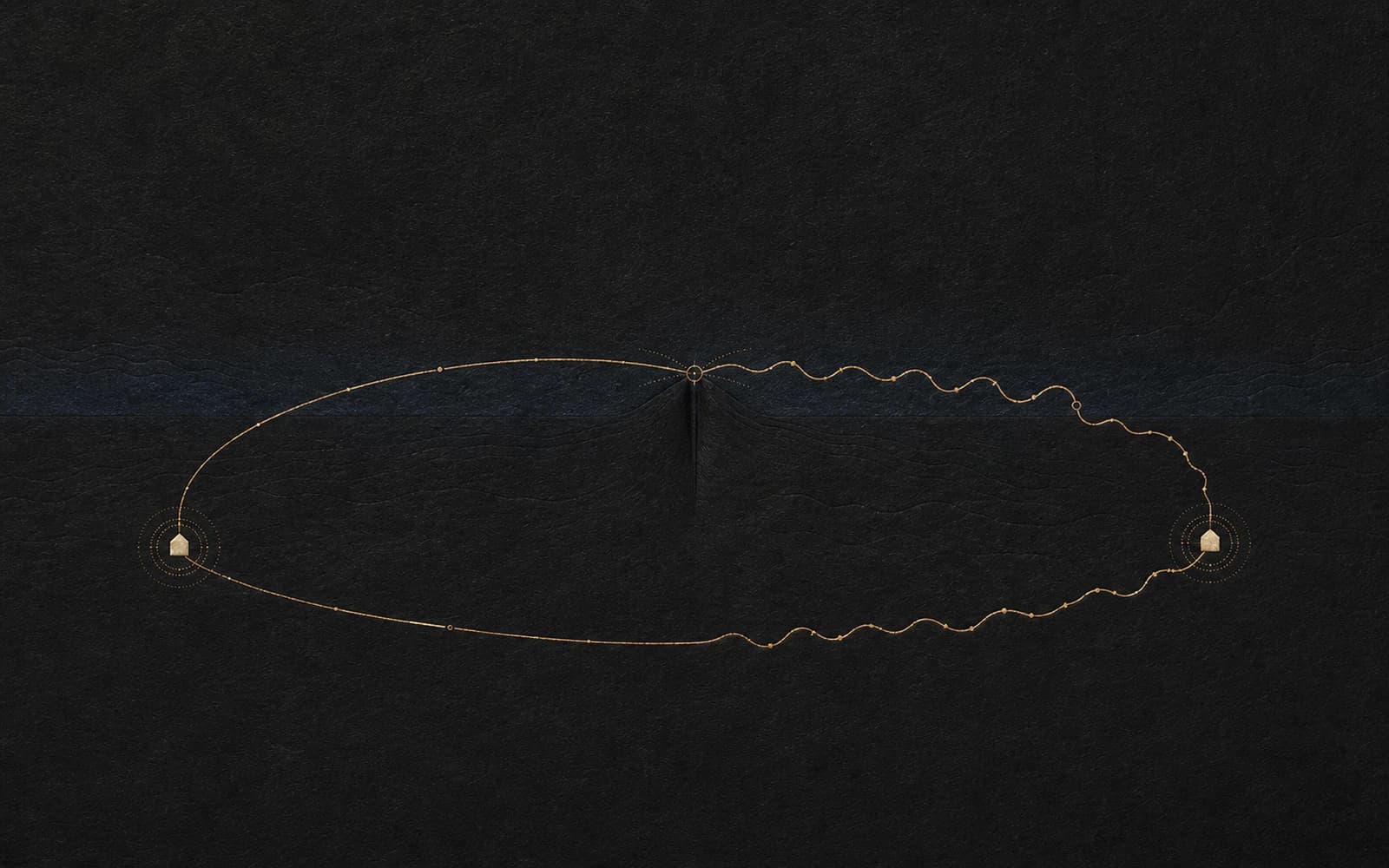
Return becomes real when someone knows the sign.
Name, scar, bow, bed, orchard, and remembered detail turn identity from a claim into something another person can verify.
Updated July 13, 2026
Five things to hold onto
- The Trojan War occupies the first ten years of Odysseus' absence.
- The return journey occupies the next ten years.
- The Odyssey narrates only the final phase directly and recalls much of the journey.
- Calypso's seven years account for most of the return decade.
- The twenty-year absence transforms Telemachus, Penelope, Laertes, and Ithaca.
The famous answer—twenty years—contains two different stories. Odysseus is absent for ten years because of war and ten years because return fails. The Iliad belongs to part of the first story; The Odyssey looks back on both while concentrating on the end of the second.
That distinction explains why the poem's homecoming is so emotionally severe. Ithaca has not been paused for twenty years. A baby has become a young man, a wife has built a life around uncertainty, and an old father has withdrawn into grief.
Years 1–10: the Trojan War
Odysseus leaves Ithaca as part of the Greek expedition against Troy. The war lasts ten years. The Odyssey assumes this background rather than retelling the entire campaign. Characters remember the wooden horse, fallen warriors, dangerous returns, and the different fates of Greek commanders.
The war years establish Odysseus' fame as a strategist, but they also create the household vacancy that defines Ithaca. Telemachus is an infant when his father goes. Penelope becomes the keeper of continuity without reliable knowledge of whether her husband lives.
Use the Trojan War backstory for the minimum names and events needed before the poem.
The early return: the fleet begins to disappear
After Troy, Odysseus sails with twelve ships. The early journey includes Ismarus and the Cicones, the Lotus-Eaters, Polyphemus, Aeolus and the bag of winds, and the Laestrygonian harbor. These episodes strip away men, time, and ships.
The crew comes painfully close to Ithaca after Aeolus gives Odysseus control of the winds. Suspicion leads the men to open the bag while he sleeps, blowing the fleet away again. The Laestrygonians then destroy every ship except Odysseus' own.
Exact day-by-day chronology is not always recoverable, but the causal movement is clear. See The Odyssey in chronological order to separate events from Homer's order of revelation.
The year with Circe
On Circe's island, an encounter that begins with transformation and danger changes into prolonged hospitality. Odysseus and his crew remain for a year. His men eventually remind him that home must again become the goal.
Circe then directs him toward the dead and warns him about dangers still ahead. This year is important because delay does not always look like suffering. Comfort, food, knowledge, and restored safety can also suspend return.
Seven years with Calypso
Calypso accounts for most of the missing decade. After Odysseus loses his last ship and all remaining companions, he reaches Ogygia. She keeps him there for seven years. When Book 5 shows him, he is sitting by the shore longing for home.
The gods finally order his release. Calypso offers extraordinary safety and immortality, but the poem defines Odysseus through his choice of a mortal return. For that moral structure, read Calypso and the cost of comfort.
The final passage through Phaeacia
Odysseus builds a raft, survives Poseidon's storm, and reaches the Phaeacians. There he receives hospitality and narrates the wanderings that the reader has not yet heard. The Phaeacians carry him to Ithaca while he sleeps.
Arrival occurs in Book 13, but arrival is not the end. Disguised, Odysseus must test allies and enemies, reunite with Telemachus, enter the occupied household, and become recognizable in stages.
What twenty years means at home
Telemachus has no lived memory of his father as a present parent. Penelope has had to preserve possibility without certainty. Laertes has withdrawn from public life and works his estate in grief. Servants have chosen loyalty, opportunism, or collaboration. Suitors behave as if absence has already become death.
That is why The Odyssey is a story of homecoming, not merely a travel record. The challenge is whether relationships can survive the elapsed time and whether proof can bridge it.
The twenty-year formula is exact enough to remember: ten at Troy, ten returning. Within the return, one year with Circe and seven with Calypso explain why “ten years at sea” is misleading. Much of Odysseus' delay happens while stopped, captive, comfortable, shipless, or telling the story of movement.
How the absence changes each generation
For Telemachus, twenty years means that fatherhood begins as a story told by other people. He must ask Nestor and Menelaus what kind of man Odysseus was, while suitors in his own house judge the father permanently absent. His growth is not simply aging; it is the acquisition of speech, travel, allies, and the capacity to stand beside a father he has never known as an adult.
For Penelope, the same years produce an impossible social position. If Odysseus lives, remarriage would betray the household; if he is dead, indefinite refusal threatens inheritance and political stability. Her weaving trick converts time into protection, but cannot stop pressure forever.
For Laertes, the absence extends backward and forward. He has lost his wife, lacks his son, and may die before seeing the line continue. For Eurycleia and Argos, memory is carried in touch, smell, habit, and the body rather than public proof.
Odysseus experiences the years differently again. He remembers Telemachus as an infant and Penelope as the wife he left, while they have become people shaped by his nonpresence. His arrival cannot simply restore an old photograph of the family. Everyone must discover whether identity has continuity across unequal memories.
That generational structure explains the poem's patience after Book 13. The island has been reached, but twenty years must be crossed through recognition one relationship at a time.
It also explains why a summary that counts only spectacular adventures feels incomplete. The elapsed years live in neglected land, consumed stores, altered loyalties, funerals missed, and memories that no longer match appearances. Time is not background to the plot; it is the condition every return scene must overcome.
Classics RediscoveredThe Odyssey Companion
We make the classics readable for modern adults. Independent and unofficial — every quotation is checkable by book number against Homer's text. Questions? hello@odysseycompanion.com
Free reading preview
Take the route, names, and recognition scenes with you.
Get the one-evening guide and a designed preview from the complete edition. Useful on its own; clear about where to go next.
Questions people ask
Was Odysseus traveling for all twenty years?
No. He spent ten years at war in Troy. During the ten-year return, long periods were stationary, including a year with Circe and seven years detained by Calypso.
How old was Telemachus when Odysseus left?
Telemachus was an infant when the Greek expedition sailed for Troy. By the opening of The Odyssey, he is a young man confronting the suitors and searching for news of the father he barely knows.
Keep reading
The Trojan War Backstory Before The Odyssey
The Trojan War backstory you need before reading the Odyssey: Troy, the Greek return, Odysseus, Agamemnon, Menelaus, and the wooden horse.
Read →
The Odyssey in Chronological Order (vs. Homer's Order)
The Odyssey in true chronological order — fall of Troy, the wanderings, seven years with Calypso, Phaeacia, the return — versus Homer's non-linear order.
Read →
The Odyssey as a Story of Homecoming
Why the Odyssey is really a homecoming story: nostos, Ithaca, recognition, Penelope, Telemachus, Laertes, and the cost of return.
Read →
Why Did Odysseus Take 10 Years to Get Home?
Why Odysseus' return took ten years: Poseidon's anger, the hero's pride, crew failures, captivity, and the poem's nonlinear timeline.
Read →