Intelligence and time
Nausicaa Meets Odysseus: The River Scene Explained
The short answer
Nausicaa meets Odysseus beside a river in Book 6 after Athena sends her to wash clothes. Shipwrecked, naked, and salt-encrusted, Odysseus emerges from cover when the girls' game wakes him. The servants flee, but Nausicaa stands firm. Odysseus chooses a respectful speech instead of touching her knees, receives clothing and food, washes at a distance, and follows her careful instructions for entering Phaeacian society.
What holds can be as powerful as what travels.
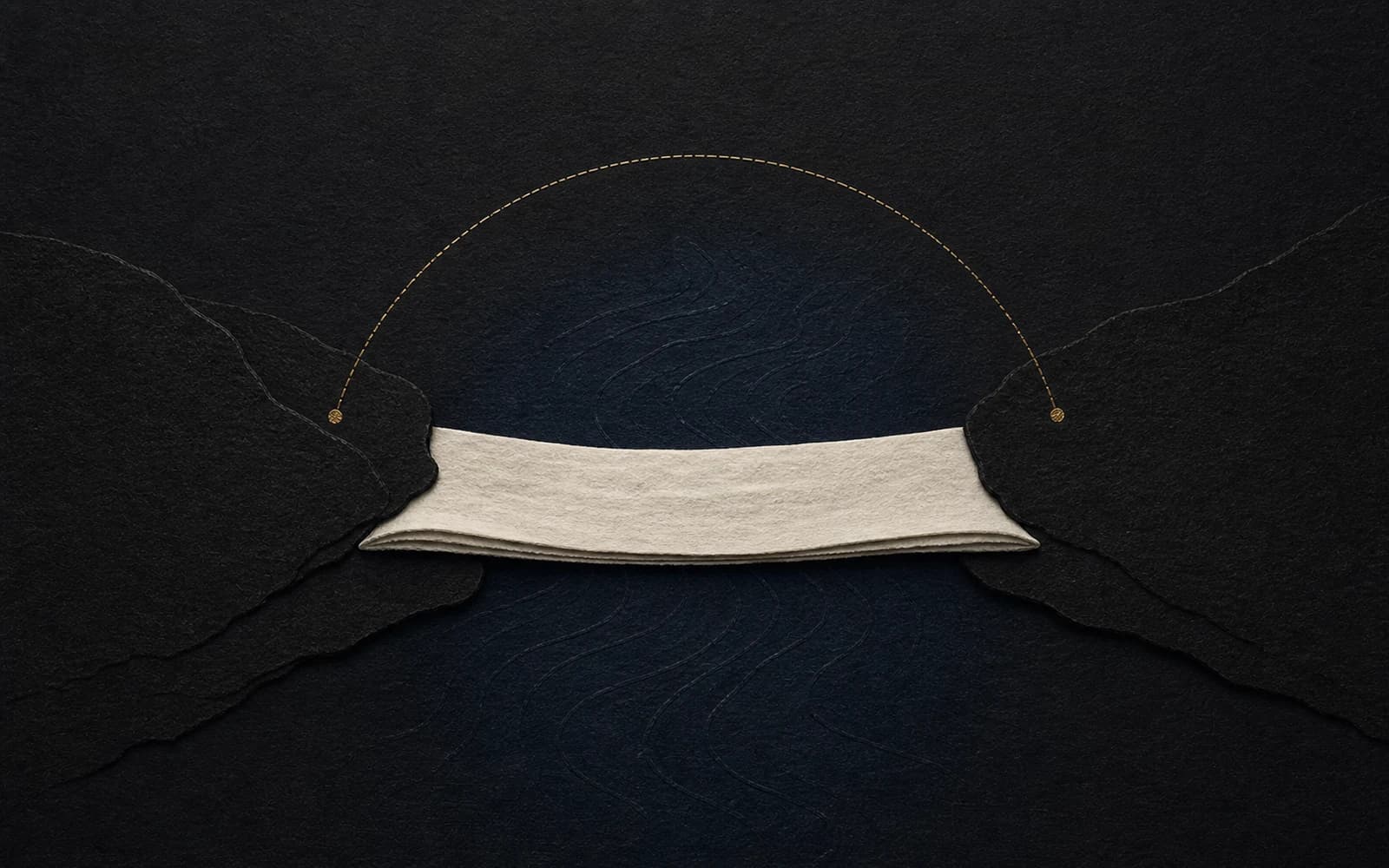
Thread, delay, memory, and careful speech form a second route through the poem: the work of keeping a world intact.
Updated July 13, 2026
Five things to hold onto
- Athena arranges Nausicaa's washing trip through a dream.
- Odysseus appears at his most physically vulnerable.
- He chooses distance and persuasive speech rather than physical supplication.
- Nausicaa provides clothing, food, oil, and directions.
- The encounter moves Odysseus from shipwreck back toward social identity.
Odysseus meets Nausicaa at the lowest visible point of his return. He has no ship, crew, clothing, food, or social introduction. He is a body washed onto foreign ground. The river scene shows him rebuilding access to human community through judgment and speech.
It also gives Nausicaa agency. Athena creates the occasion, but the young woman must decide whether the frightening stranger receives help.
Athena's dream and the washing trip
Athena appears in Nausicaa's dream in the form of a friend and urges her to wash the household's clothing, connecting the task to approaching marriage. Nausicaa asks her father for a wagon without directly stating the marriage concern. He understands enough and agrees.
At the river, Nausicaa and her attendants wash clothes, eat, and play ball. Their shouts wake Odysseus from the cover where he has slept after shipwreck.
The Book 6 summary places Athena's planning and the river encounter in full sequence.
Odysseus appears as a threat
Odysseus covers himself with a leafy branch and approaches. Homer compares him to a hungry lion driven toward danger. The servants run. From their perspective, a naked, weather-damaged man has emerged from the wild.
Nausicaa remains because Athena gives her courage. This does not erase the risk she perceives; it makes her response an act of steadiness rather than naïveté.
The scene holds two views at once: the reader knows the celebrated hero, while the girls see an unknown male body without proof of identity.
Speech instead of touch
Odysseus considers clasping Nausicaa's knees, the physical gesture of supplication. He decides against it because contact may anger or frighten her. He speaks from a distance.
His speech praises her carefully, compares her to Artemis, recalls a palm tree he once saw, explains his suffering without overwhelming detail, and asks for clothing and guidance. He also blesses her future marriage.
The choice demonstrates social intelligence. He does not demand recognition of rank or announce every exploit. He shapes language to the vulnerable position he actually occupies.
Nausicaa's hospitality
Nausicaa identifies the Phaeacian land and tells her attendants to return. She orders food, drink, clothing, and oil for the stranger. She recognizes an obligation to a wandering person without first requiring a complete biography.
Odysseus washes away from the women, refusing to bathe naked among them. Athena then heightens his appearance. The transformation changes how the attendants see him, but the practical restoration began with water, clothing, and food.
This is a model scene for xenia, or hospitality: aid precedes interrogation.
Why they enter the city separately
Nausicaa worries that townspeople will gossip if she is seen traveling beside an unknown man. She tells Odysseus to follow later, wait in Athena's grove, and then approach the palace. Most importantly, she directs him to appeal to her mother Arete.
Her plan protects reputation while still providing help. Hospitality does not require ignoring social consequences. Nausicaa understands her city's gaze and gives Odysseus a route through it.
The next stage belongs to the Phaeacians, whose palace, songs, and ships complete his passage home.
Clothing and the return to identity
Clothing is not cosmetic in this scene. Nakedness leaves Odysseus outside visible status: no armor, royal fabric, crew, or household mark tells Nausicaa who he is. Borrowed clothes make social entry possible without proving his name.
The poem repeatedly separates identity from appearance. Athena can alter how Odysseus looks; disguise will later protect him on Ithaca. What remains his own is the capacity to judge a situation and speak within its limits.
For Nausicaa, clothing is also labor and future household preparation. The washed garments that bring her to the river become the means by which a stranger can re-enter civilization.
Is the scene romantic?
Marriage possibility surrounds the encounter, and Nausicaa later expresses a wish for a husband like Odysseus. Her father also imagines he could remain. Yet Odysseus does not pursue a new marriage. He accepts help and continues toward Penelope.
Reducing Nausicaa to a love interest misses her structural role. She is the first human being to receive Odysseus after his final shipwreck and the person whose tact moves him from nature to palace. Read Who is Nausicaa? for her place beyond a romance that never occurs.
The scene also redistributes power in a way a heroic summary can miss. Odysseus has age, fame, and experience, but none of those qualities grants immediate authority at the river. Nausicaa has local knowledge, clothing, servants, family access, and the ability to decide whether he remains outside. His success depends on recognizing her position rather than asserting his own.
Her instructions reveal political intelligence. She anticipates gossip, separates their arrivals, names the correct route, and tells him that Arete's favor is decisive. Hospitality is therefore not spontaneous kindness alone; it is skilled navigation of a community's rules.
Odysseus' bath preserves boundaries too. He asks the women to stand apart while he washes, then receives Athena's enhancement only after basic care. The sequence refuses to make divine beauty the cause of Nausicaa's first courage. She helps while he still looks frightening and unknown.
When Odysseus later remembers Nausicaa, gratitude rather than romance should frame the connection. She gives him the social bridge the sea cannot provide. Without her, Phaeacian ships may never become available, and a hero close to home could remain stranded outside the human order needed to reach it.
The river scene is therefore a small education in return. Odysseus does not recover status by declaring himself king; he earns passage by reading another person's fear, accepting dependence, and following instructions. The man of many turns survives here through restraint, and Nausicaa's practical judgment becomes as necessary as Athena's design.
Classics RediscoveredThe Odyssey Companion
We make the classics readable for modern adults. Independent and unofficial — every quotation is checkable by book number against Homer's text. Questions? hello@odysseycompanion.com
Free reading preview
Take the route, names, and recognition scenes with you.
Get the one-evening guide and a designed preview from the complete edition. Useful on its own; clear about where to go next.
Questions people ask
Does Nausicaa fall in love with Odysseus?
The scene creates attraction and marriage possibility, but Homer does not narrate a romance or sexual relationship. Nausicaa helps Odysseus enter Phaeacian society, and he continues toward Ithaca.
Why doesn't Odysseus touch Nausicaa's knees?
He considers formal physical supplication but decides that approaching a young woman while naked could frighten her. He uses a carefully shaped speech from a respectful distance.
Keep reading
Who Is Nausicaa in The Odyssey?
Nausicaa's role in the Odyssey explained: the Phaeacian princess meets the shipwrecked Odysseus, gives him clothing, and guides him safely toward the palace.
Read →
The Odyssey Book 6 Summary: Odysseus Meets Nausicaa
Book 6 explained: Athena sends Nausicaa to the river, Odysseus approaches carefully, and the princess gives him a route into Phaeacia.
Read →
Xenia: Hospitality in the Odyssey
Xenia in the Odyssey: the guest-host code protected by Zeus, honored by the Phaeacians, Eumaeus, Nestor and Menelaus, broken by the Cyclops and the suitors.
Read →
Who Are the Phaeacians in The Odyssey?
Who the Phaeacians are, how Nausicaa, Arete, Alcinous, Demodocus, and their ships move Odysseus from wandering to Ithaca.
Read →