Scale and material
Tactile Realism and the Supernatural in Nolan's Odyssey
The short answer
Tactile realism makes the supernatural in Nolan's Odyssey feel physically encountered instead of abstractly illustrated. Reports on the production describe real locations, a modified working vessel, and an extensive international shoot. Those choices give wind, water, bodies, and scale material force. They do not by themselves explain away Homer's gods or monsters; realism changes how marvels are perceived, not whether the story permits divine causation.
Format changes the encounter, not the source.
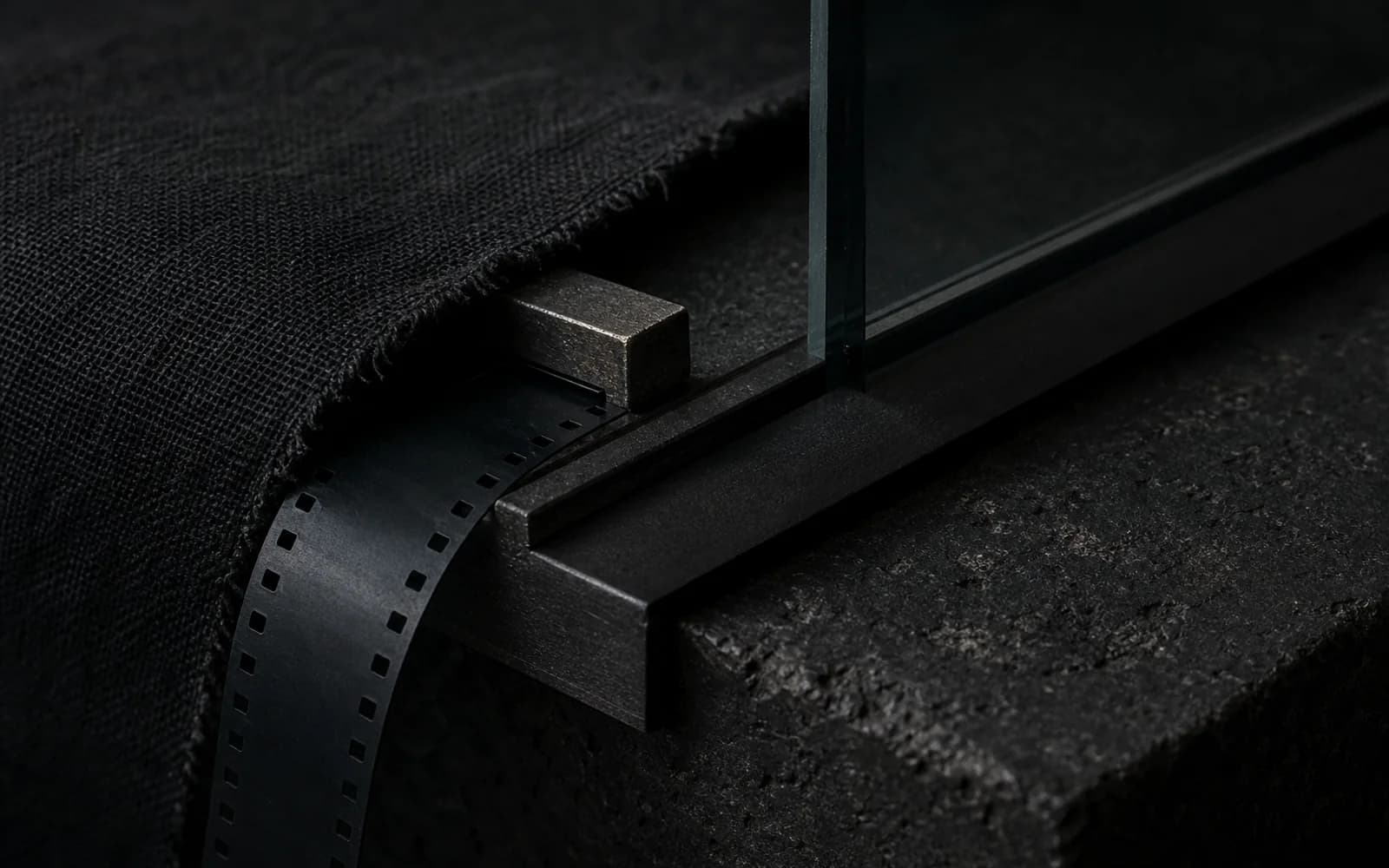
Lens, film strip, aperture, and physical texture clarify how cinematic craft shapes scale while Homer remains the deeper reference.
Updated August 1, 2026
Four things to hold onto
- Physical production gives danger weight, duration, and spatial consequence.
- Homer's supernatural events still operate through bodies, weather, objects, and landscapes.
- Realistic texture does not automatically turn gods and monsters into hallucinations.
- The film's material style can intensify myth without secularizing it.
Nolan's tactile realism gives the supernatural a physical address. Seas have weight, ships occupy space, and bodies meet environments that resist them. This material style can make myth feel more immediate without proving that gods and monsters are only psychological.
The production built physical pressure
Associated Press reporting describes a long international production across multiple countries and the use of a modified working vessel. NBCUniversal's official behind-the-scenes material likewise emphasizes location work and large-format filmmaking.
Those sources support a careful claim: the production sought substantial physical environments and objects. They do not support the stronger claim that every image was practical or that visual effects played no role.
The distinction matters because "real" is often used loosely in film promotion. A working ship can anchor a sequence even when weather, scale, or dangerous elements require additional techniques.
Homer already gives marvels material form
The Odyssey does not place the supernatural outside ordinary matter. Athena changes appearances. Poseidon works through the sea. Aeolus binds winds in a bag. Circe uses food, drink, a wand, and transformation. The Sirens' danger arrives as sound across water.
Divine and material causation overlap. A storm can be weather and Poseidon's action. A disguise can be cloth, posture, age, and Athena's intervention at once.
This is why the question explored in Is The Odyssey a true story? cannot be settled by separating "realistic" geography from "unrealistic" myth. Epic makes landscapes carry divine meaning.
Tactile imagery changes belief
A physically convincing ship rolling through water asks the viewer to believe first in weight and risk. Once that belief is established, a supernatural event does not need ornamental fantasy design to feel extraordinary.
The effect can be intensification. A giant encountered in a cramped cave feels more threatening when stone, fire, skin, and scale belong to one continuous space. A divine storm feels less like an inserted spectacle when wind and water have already been established as dangerous forces.
That does not decide what the film says the event is. Tactile texture is a mode of presentation, not an explanation.
Realism can invite psychological readings
When gods are less visually separate from the human world, viewers may read supernatural conflict as psychology, memory, fate, or natural danger. That response is understandable, especially in a film that emphasizes the aftermath of war.
It remains an interpretation. The finished film must provide evidence through framing, dialogue, causation, and recurrence. Production choices alone cannot establish that Poseidon is "really" trauma or that Athena is "only" intuition.
Our guide to the gods in The Odyssey shows why divine agency in Homer is rarely reducible to one symbolic meaning. Gods have personalities and rivalries while also making human tendencies visible.
Scale is a mythic instrument
Large-format cinematography can make bodies look vulnerable inside sea, cave, battlefield, or palace. Scale organizes power; it does more than show that the world is big.
Odysseus survives partly because he can read spaces and alter relations within them. He hides beneath animals, steers between dangers, enters Ithaca in disguise, and controls access to the hall. A tactile environment makes these acts of intelligence spatially legible.
The production's physical commitment therefore serves more than spectacle. It can help the audience understand why a rope, door, bow, bed, scar, or shoreline carries narrative force.
What realism risks losing
Material consistency can make wonder too uniform. Homer changes tone rapidly: horror becomes curiosity, domestic comedy sits beside divine threat, and a formal feast can open into impossible storytelling.
If every marvel is rendered through the same severe physical register, the poem's tonal variety may contract. Gods can begin to feel like weather systems, enchantresses like therapists, and monsters like unusually large opponents.
That may produce a coherent film, but coherence is not identical to fidelity. The Odyssey themes guide helps restore the multiple registers in which the poem operates: ritual, adventure, family drama, political conflict, folktale, and divine comedy.
Physical scale can make marvels harder to dismiss
Myth does not require visual softness or decorative antiquity. It requires a world in which actions exceed individual explanation and become patterns: guest and host, exile and return, appetite and limit, concealment and recognition.
A physically credible world can make those patterns harder to dismiss. The supernatural enters objects and landscapes that feel consequential. The viewer experiences myth not as an illustrated legend but as pressure acting on mortal bodies.
The best post-film conclusion is therefore double. Nolan's realism materially transforms how Homer's marvels are seen. It does not automatically disenchant them. The sea remains water, Poseidon's domain, and an image of forces no traveler can completely control.
Classics RediscoveredThe Odyssey Companion
We make the classics readable for modern adults. Independent and unofficial — every quotation is checkable by book number against Homer's text. Questions? hello@odysseycompanion.com
Free reading preview
Take the route, names, and recognition scenes with you.
Get the one-evening guide and a designed preview from the complete edition. Useful on its own; clear about where to go next.
Questions people ask
Was Nolan's Odyssey filmed on a real ship?
Associated Press production reporting describes a modified working vessel used during the international shoot. That supports a claim about physical production, not a claim that every maritime image was created without visual effects.
Does tactile realism mean the movie removes the gods?
No. A realistic image style and a supernatural story can coexist. Judge whether a particular event is divine, psychological, or ambiguous from the finished film; production method alone cannot settle it.
Keep reading
The Odyssey Themes Explained
The major themes of the Odyssey explained for adult readers: homecoming, identity, temptation, hospitality, fate, and recognition.
Read →
Is the Odyssey a True Story?
Is Homer's Odyssey a true story? No — it is legend, not history, but rooted in a real Bronze Age world. What's genuine, what's invented, and how to read it.
Read →
The Gods in The Odyssey
The gods in Homer's Odyssey, explained: Athena, Poseidon, Zeus, Hermes, Helios, and the minor divinities — who each one drives and why.
Read →
Why The Odyssey Was Shot on IMAX Film
Why The Odyssey used IMAX film for every frame, how the new Keighley camera helped, and what 2.1 million feet of film means for Nolan's epic.
Read →