Pressure
The Bag of Winds in The Odyssey, Explained
The short answer
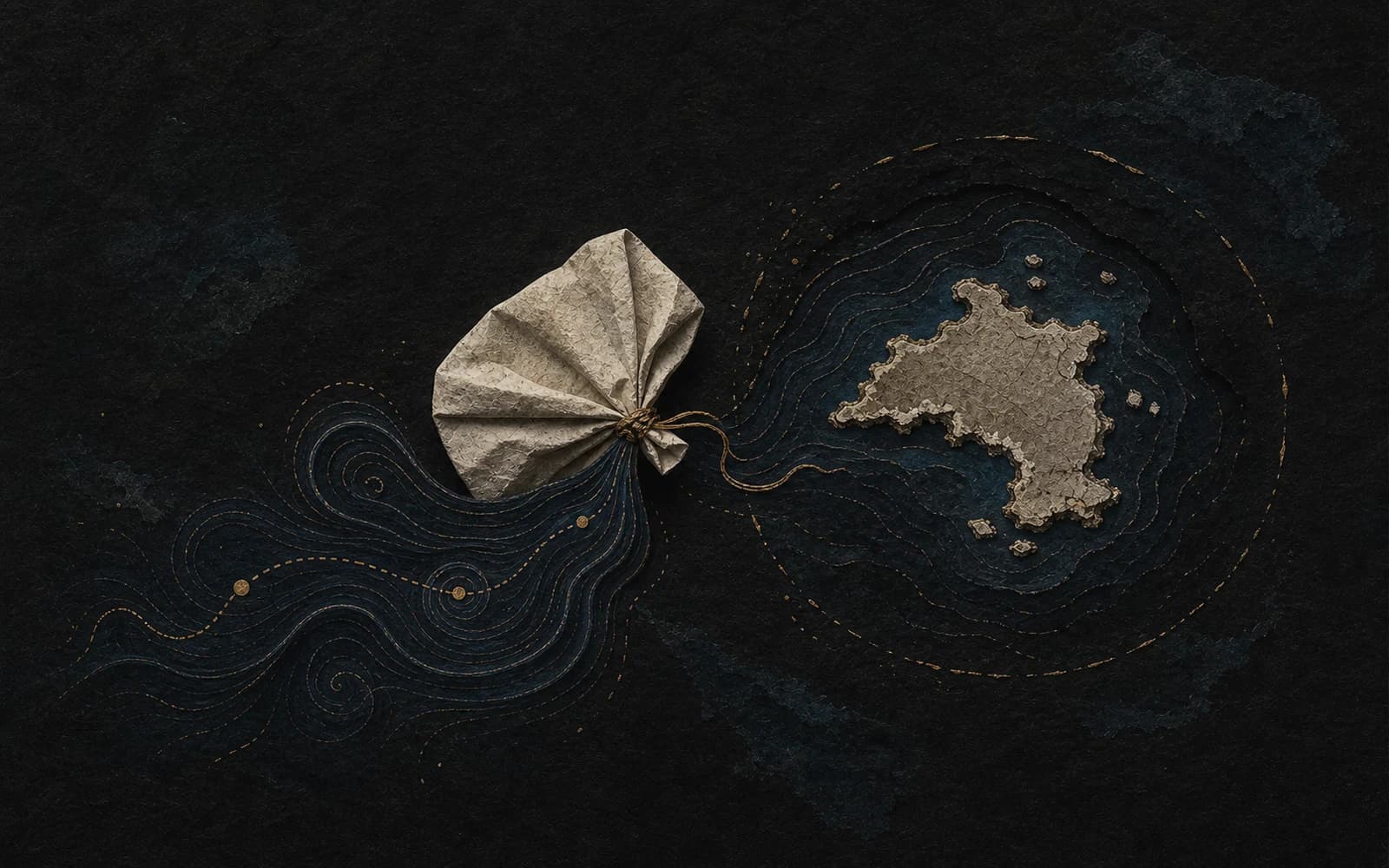
Aeolus gives Odysseus a leather bag containing every wind that could drive his fleet off course, leaving the west wind free to carry them toward Ithaca. After nine days, home is visible. Odysseus falls asleep, and his crew, believing the bag hides gold and silver, opens it. The released winds blow them back to Aeolus, who refuses further help because he assumes their failure shows divine hostility.
The sea makes every choice harder to hide from.
Storm, hunger, command, resistance, and consequence expose what a person and a crew become when control disappears.
Updated July 13, 2026
Five things to hold onto
- Aeolus confines the contrary winds and releases a favorable one.
- Odysseus keeps control of the bag and sails for nine days.
- The crew mistakes secrecy for withheld treasure.
- Opening the bag reverses a nearly completed return.
- Aeolus interprets the second arrival as evidence the gods oppose Odysseus.
The bag of winds is one of the cruelest reversals in The Odyssey because success is visible. Odysseus has not merely found the right direction; Ithaca is close enough for the crew to see signs of life. The journey fails within sight of home.
The cause is not a monster. It is a leadership system built around one exhausted man holding knowledge and control that his companions do not share.
What Aeolus gives Odysseus
Aeolus, keeper of the winds, hosts Odysseus for a month and listens to the story of Troy and the Greek return. When Odysseus asks to leave, Aeolus binds the dangerous winds inside a leather bag and fastens it securely to the ship. He allows the west wind to carry the fleet toward Ithaca.
The gift is precise rather than magical wish fulfillment. It controls conditions that have already made sea travel unstable. The route works for nine days and nights.
Place the episode in sequence with The Odyssey in chronological order.
Why Odysseus falls asleep
Odysseus handles the steering continuously because he trusts no one else with it. After nine days, exhaustion wins. Sleep is not laziness; it is the predictable failure point of a plan that depends on one person never becoming unavailable.
His men see the bag and reinterpret it. They remember gifts Odysseus received at Troy and from Aeolus, imagine gold and silver, and resent being excluded. Their assumption is wrong, but secrecy makes it emotionally plausible to them.
The commander knows what the bag contains. The crew knows only that he guards it. The difference becomes catastrophic when he can no longer supervise.
The moment the bag opens
The released winds strike at once. The favorable course collapses, and the fleet is driven back across the sea. Odysseus wakes and considers throwing himself overboard, then chooses endurance.
That choice matters. The episode humiliates him, but it does not end his return. Survival here means continuing after a preventable loss caused by his own company.
The reversal also explains part of why Odysseus takes ten years to get home: the fleet reaches the threshold, then loses the distance again.
Why Aeolus refuses a second time
When the ships return, Odysseus approaches Aeolus with a small group and asks again for help. Aeolus sends him away. He reasons that someone so visibly rejected by the blessed gods must be dangerous to assist.
The conclusion is mistaken if treated as a complete moral diagnosis. The immediate failure came from crew action, not an explicit divine order. Yet in the poem's world, repeated disaster looks like evidence of divine disfavor. Aeolus will not risk becoming involved.
The refusal converts one opened bag into a permanent lost opportunity. A host who was generous becomes a boundary the fleet cannot cross twice.
The episode is about mistrust, not stupidity
Calling the crew simply foolish makes the story flatter. Their action is disastrous, but it grows from a real political problem: unequal distribution of knowledge and rewards. Odysseus received gifts they did not inspect and keeps the new object under personal control.
Their envy defeats evidence. Ithaca is ahead; the wind is favorable; opening a sealed gift at sea cannot improve navigation. Still, suspicion becomes stronger than the shared goal.
The episode therefore belongs to leadership in The Odyssey, not only to a list of crew mistakes. A plan that works only while the leader stays awake is not resilient.
What the bag symbolizes
The bag contains controlled possibility. Closed, it makes return possible by limiting chaos. Opened, it releases every competing direction at once. It also becomes a false treasure chest in the crew's imagination.
The object gathers several themes: knowledge withheld, labor concentrated, envy, exhaustion, and the danger of being almost home. On the journey map, the voyage seems to approach Ithaca and then repeat itself. Emotionally, the distance after failure is greater because the destination was already visible.
No god forces the men to open the bag. The episode keeps responsibility human and collective: a correct route cannot survive a company that no longer trusts the person steering it.
Why the gift is more than a shortcut
Aeolus does not erase the journey; he reorganizes its risks. The contrary winds remain present, compressed inside an object that requires discipline. The favorable wind can carry the fleet only while the boundary holds. This makes the gift a test of custody as much as navigation.
Odysseus responds by guarding both helm and bag personally. His diligence is extraordinary, but it gives the crew no meaningful role in protecting success. A stronger arrangement might have included explanation, watches, or shared knowledge. Homer does not say such a plan would have worked, yet the chosen plan clearly contains one point of failure: Odysseus' body.
The crew's belief in hidden treasure also grows from the economy of heroic reward. Leaders receive prestigious gifts, and spoils are divided. Their suspicion is not invented from nothing, but it becomes irrational when it overrides the collective evidence of a homeward wind and visible destination.
After the reversal, Aeolus treats outcome as proof of character or divine status. The fleet has failed, therefore it must be hated by the gods. Readers know more: the gift worked exactly as intended until human relationships failed around it. The episode warns against judging a person's entire moral standing from disaster while still holding the disastrous choice accountable.
The bag never returns as a tool. Its loss makes the lesson irreversible: there is no second sealed solution waiting after mistrust has broken the first. From this point, home cannot be reached by controlling every external force. Odysseus will need hosts, disguise, patience, and eventually a crew not his own.
Classics RediscoveredThe Odyssey Companion
We make the classics readable for modern adults. Independent and unofficial — every quotation is checkable by book number against Homer's text. Questions? hello@odysseycompanion.com
Free reading preview
Take the route, names, and recognition scenes with you.
Get the one-evening guide and a designed preview from the complete edition. Useful on its own; clear about where to go next.
Questions people ask
Why did Odysseus' crew open the bag of winds?
They suspect Aeolus gave Odysseus private treasure and that their leader is keeping it from them. Their envy and mistrust overcome the obvious need to leave the bag closed.
Was Ithaca really in sight when the bag was opened?
Yes. Odysseus says they were close enough to see the fires of people on Ithaca before he fell asleep and the crew opened the bag.
Keep reading
Why Did Odysseus Take 10 Years to Get Home?
Why Odysseus' return took ten years: Poseidon's anger, the hero's pride, crew failures, captivity, and the poem's nonlinear timeline.
Read →
The Odyssey in Chronological Order (vs. Homer's Order)
The Odyssey in true chronological order — fall of Troy, the wanderings, seven years with Calypso, Phaeacia, the return — versus Homer's non-linear order.
Read →
Odysseus' Journey Map: Every Stop from Troy to Ithaca
Every stop on Odysseus' ten-year route from Troy to Ithaca — Cyclops, Circe, Sirens, Calypso — what happens at each one, and what it costs him.
Read →
Leadership in The Odyssey: Why Odysseus Loses Every Ship
An episode-by-episode audit of Odysseus's leadership: command failures, crew disobedience, divine hostility, bad luck, and survival.
Read →
Who Is Aeolus in The Odyssey? The Bag of Winds Explained
Aeolus's role in the Odyssey explained: the keeper of the winds gives Odysseus a sealed bag, but the crew opens it within sight of Ithaca.
Read →
The Odyssey Book 10 Summary: Aeolus, Laestrygonians, and Circe
Book 10 explained: the bag of winds, Laestrygonian destruction, Circe's enchantment, Hermes's aid, and the command to visit the dead.
Read →