Recognition
The Bow Contest in The Odyssey, Explained
The short answer
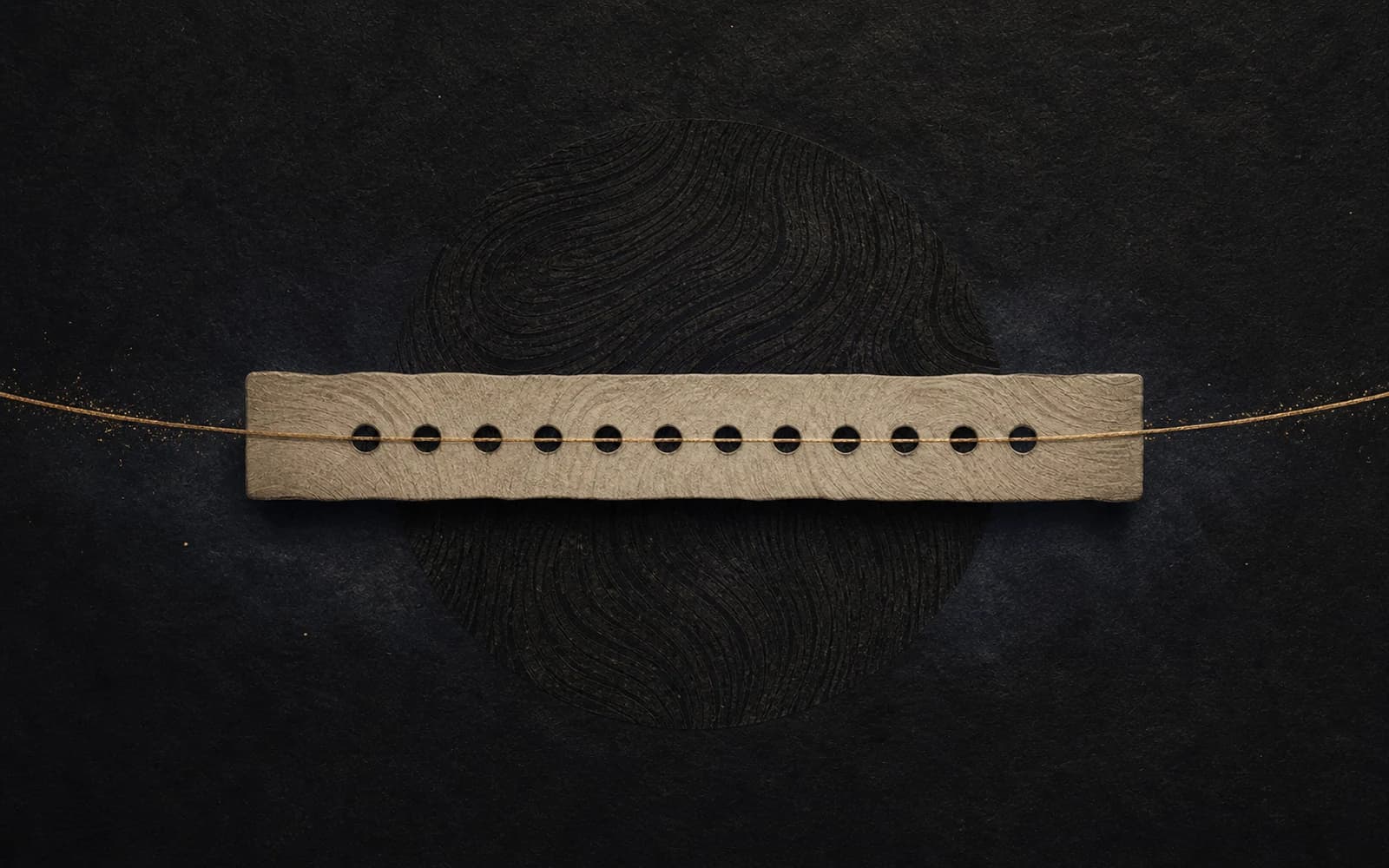
In Book 21, Penelope announces that she will marry the suitor who can string Odysseus' bow and shoot an arrow through twelve aligned axe heads. The suitors who attempt the test cannot string it; Antinous delays his own attempt. The disguised Odysseus reveals himself privately to Eumaeus and Philoetius, secures the room, receives the bow, strings it with ease, and completes the shot. The contest recognizes his unique mastery and places a weapon in his hands for Book 22.
Return becomes real when someone knows the sign.
Name, scar, bow, bed, orchard, and remembered detail turn identity from a claim into something another person can verify.
Updated July 13, 2026
Five things to hold onto
- Penelope brings out Odysseus' bow and defines the marriage contest.
- Telemachus nearly strings it but stops at Odysseus' signal.
- The suitors who attempt the test fail before the disguised stranger asks to try.
- Eumaeus and Philoetius help control doors and weapons.
- The successful shot becomes both recognition and preparation for judgment.
The bow contest is the hinge between concealment and open action. For many books, Odysseus has survived by looking powerless and withholding his name. In Book 21, an object proves what appearance cannot—and arms him at the same moment.
Penelope creates the contest, but its outcome exceeds her announced purpose. A marriage test becomes the mechanism through which the occupied house changes hands.
Penelope brings out the bow
Athena inspires Penelope to set the challenge. She retrieves Odysseus' bow from storage and weeps over it before carrying it to the hall. The weapon has a history and has remained absent with its owner.
Penelope declares that she will follow the man who can string the bow and send an arrow through twelve axe heads. The challenge appears to settle remarriage through a feat no suitor expects to fail collectively.
For the surrounding events, read the Book 21 summary.
Telemachus tries first
Telemachus sets up the axes with care and attempts the bow. He fails several times and nearly succeeds on another effort, but Odysseus signals him to stop.
The moment shows that the son is approaching his father's physical world without yet replacing him. It also protects the plan: Telemachus must not win a contest for his mother's remarriage or reveal too much before the doors and allies are ready.
His near-success distinguishes him from the suitors while keeping the decisive recognition for Odysseus.
Why the suitors fail
The suitors warm and grease the bow, trying to make it easier to bend. One after another, they fail. Antinous postpones his own attempt and proposes continuing after a feast day for Apollo.
Their failure exposes the difference between occupation and legitimacy. They eat Odysseus' food, command servants, threaten his son, and compete for his wife, but cannot use his weapon.
The bow is not a democratic prize awarded to the strongest man in the room. It carries specific embodied knowledge associated with the absent householder.
The beggar asks for a turn
Odysseus has already revealed himself to the loyal herdsmen Eumaeus and Philoetius, proving identity through the scar and assigning tasks. Doors are controlled; weapons have been removed from the hall.
When the beggar asks to try the bow, the suitors object. Penelope defends his right, but Telemachus sends her upstairs and takes authority over the contest. Eumaeus carries the bow to Odysseus despite mockery and threats.
The transfer looks like hospitality toward a weak stranger. In reality, it restores the master's weapon to his hand.
Stringing and shooting
Odysseus examines the bow to make sure it has not been damaged. He strings it easily and tests the string's sound. Zeus sends thunder as a sign. Odysseus then shoots through the aligned axes without missing.
The feat completes the stated contest, but no wedding decision follows. Telemachus takes his position beside his father, and Book 22 begins with Odysseus' next arrow striking Antinous.
The step-by-step ending continues in how The Odyssey ends.
Recognition before revenge
The suitors do not immediately understand what the successful shot means. The reader does. The bow recognizes Odysseus through performance before he announces himself through speech.
That order matters because the poem has repeatedly made identity a problem of evidence. A name can be lied about; appearance can be changed by Athena. Skill with the bow joins scar, bed, and orchard as material knowledge that survives disguise.
The object's wider meanings are explored in what Odysseus' bow symbolizes.
Is the contest fair?
As a marriage contest, it is impossible for the suitors and built around another husband's unique weapon. As a trap, it concentrates them in the hall while Odysseus' allies secure exits. Penelope's intention remains debated, but the poem does not explicitly say she knows the beggar's identity when she announces it.
The contest therefore belongs to the moral tension of revenge and justice. It exposes the suitors' incapacity, but it also becomes the opening move of a killing for which they have not prepared.
The bow ends disguise without producing peaceful recognition. In the world the suitors created, proof of identity arrives as a weapon.
The axe heads deserve the same caution as the bow. Translators and scholars have debated the precise physical arrangement through which the arrow passes, partly because ancient axe forms and the Greek wording do not yield one universally agreed reconstruction. The stable narrative fact is the aligned twelve-part shot and Odysseus' successful completion. A diagram should label its reconstruction rather than present one modern prop design as certain.
Penelope's knowledge also remains deliberately difficult. She creates a contest perfectly suited to Odysseus, speaks in defense of the beggar's attempt, and leaves before the shot. Readers may suspect recognition or intuition, but the poem does not give a direct statement that she knows his identity at this moment. Her later bed test still performs necessary verification.
Apollo's presence adds another layer. The bow is his characteristic weapon, and Antinous proposes delaying the contest during a festival for the god. Odysseus' successful shot occurs under divine signs, but human preparation remains essential: loyal servants secure the hall, Telemachus manages authority, and the disguised man has spent days gathering information.
The scene therefore joins ritual, craft, family, and tactics. It is not simply a feat of superior strength. The bow must be retrieved, preserved, transferred across opposition, strung with knowledge, and fired through an arrangement prepared by the son. A household acts around the object before the master can use it.
Classics RediscoveredThe Odyssey Companion
We make the classics readable for modern adults. Independent and unofficial — every quotation is checkable by book number against Homer's text. Questions? hello@odysseycompanion.com
Free reading preview
Take the route, names, and recognition scenes with you.
Get the one-evening guide and a designed preview from the complete edition. Useful on its own; clear about where to go next.
Questions people ask
What is the bow contest in The Odyssey?
Penelope challenges the suitors to string Odysseus' bow and shoot through twelve axe heads set in a line. She says she will marry the man who succeeds.
Why can only Odysseus string the bow?
The poem treats the bow as bound to his distinctive strength, knowledge, and handling. The suitors possess his house but cannot master the object that identifies its absent owner.
Keep reading
The Odyssey Book 21 Summary: The Bow Contest
A step-by-step Book 21 summary: Penelope brings out Odysseus's bow, the suitors fail to string it, and the disguised king proves his identity.
Read →
How Does The Odyssey End? The Ending Explained
How the Odyssey ends, step by step: the disguised return, the contest of the bow, the killing of the suitors, Penelope's bed test, and the final truce.
Read →
What Does Odysseus's Bow Symbolize?
Odysseus's bow joins physical identity, household authority, marriage, memory, and judgment in the Odyssey's final contest.
Read →
Revenge or Justice? The Killing of the Suitors Explained
Was killing the suitors revenge or justice? Weigh their crimes, divine approval, unequal punishments, and the civil aftermath in Book 24.
Read →