Intelligence and time
Penelope's Bed Test in The Odyssey, Explained
The short answer
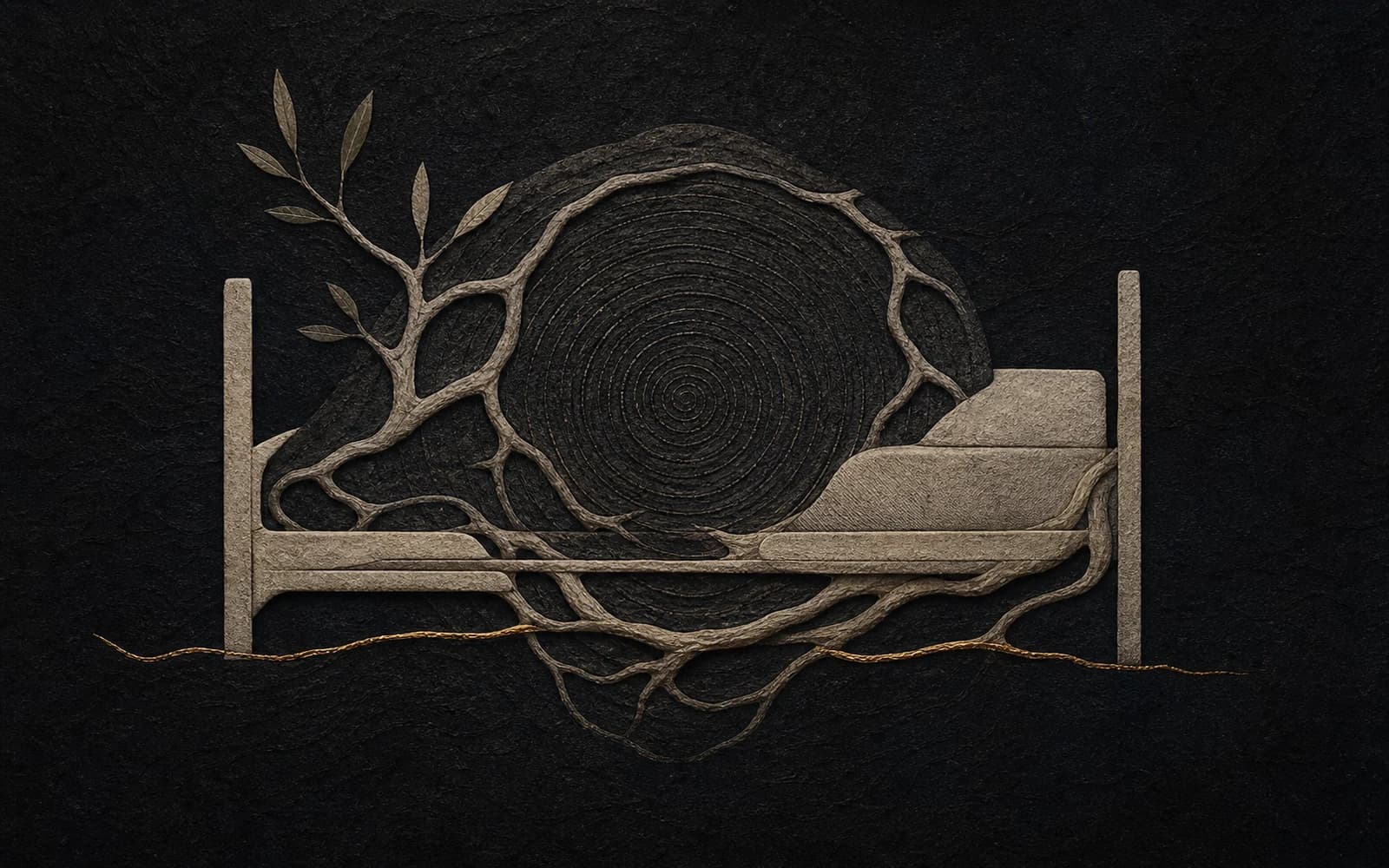
In Book 23, Penelope refuses to accept Odysseus on appearance alone. She tells Eurycleia to move their marriage bed outside the chamber. Odysseus protests because he built the bed around a living olive tree rooted in the ground; it cannot be moved unless someone has cut the trunk. Penelope says that she, Odysseus, and Actor's daughter—the attendant who guarded the room—know the bed's construction. Penelope finally recognizes him because intimate domestic knowledge proves identity more securely than face or fame.
What holds can be as powerful as what travels.
Thread, delay, memory, and careful speech form a second route through the poem: the work of keeping a world intact.
Updated July 13, 2026
Five things to hold onto
- Penelope remains cautious even after the suitors are dead.
- She orders the supposedly movable bed prepared for Odysseus.
- Odysseus explains that its olive-tree foundation makes movement impossible.
- The secret proves a shared history no impostor should know.
- Marital recognition, not the massacre, completes the personal return.
Penelope's test occurs after the obvious climax. The suitors are dead, the hall has been cleansed, and Athena restores Odysseus' appearance. Still Penelope does not run to him. Twenty years of uncertainty cannot be ended by a man looking convincing.
Her caution gives the reunion its force. Odysseus has reclaimed the house by violence; he must be admitted to the marriage through knowledge.
Why Penelope does not trust appearance
Eurycleia tells Penelope that Odysseus has returned, but Penelope suspects divine action, madness, or deception. When she enters the hall, she studies the man and struggles between recognition and doubt.
Telemachus criticizes her coldness. Odysseus understands more readily that she needs proof. He has himself tested allies and concealed his identity throughout Ithaca.
Her skepticism is not lack of love. It is the intelligence that has kept the household open to his return without trusting every claim made during his absence. See Penelope and the intelligence of staying.
The instruction to move the bed
Penelope tells Eurycleia to prepare the bed outside the chamber for the stranger. The instruction sounds practical, but it contains an impossibility.
Odysseus reacts with pain and anger. He asks who has moved his bed and whether someone has cut the olive trunk. His response provides details Penelope has not supplied.
The test is elegant because it does not ask, “Are you Odysseus?” It creates a false premise that only the real builder can expose.
How Odysseus built it
Odysseus explains that a living olive tree grew within the place where he constructed the chamber. He built walls around it, cut and shaped the trunk, and made it the bedpost and foundation. The bed is rooted to the land.
This is not a public exploit from Troy that a clever impostor might learn. It is domestic craft performed before the long absence and shared only with Penelope and a trusted servant.
The knowledge joins mind and hand. Odysseus proves himself by remembering how he made a home, not how he destroyed a city.
Penelope's recognition
Once Odysseus describes the bed, Penelope embraces him and explains her caution. She invokes Helen as an example of how divine influence and deception can bring catastrophe. Odysseus weeps.
Homer compares their reunion to the relief of shipwrecked people reaching land. The simile reverses the poem's dominant direction: Penelope experiences Odysseus as the shore she has also struggled to reach.
The Book 23 summary follows the reunion into Odysseus' account of Tiresias' future prophecy.
What the olive tree means
The bed is living wood transformed by craft without being severed from its root. It joins permanence and growth, nature and household, sexual union and built structure.
It is also vulnerable. Penelope's test imagines that someone may have cut it. Twenty years of absence create exactly that fear: the marriage may look present while its foundation has been altered.
For evidence that Odysseus' commitment is more than romantic speech, see does Odysseus love Penelope?.
Why this is the true homecoming climax
The bow proves Odysseus' mastery, and the killing restores control of the hall. Neither can make Penelope recognize him. Force can remove rivals but cannot manufacture shared memory.
That is why the ending of The Odyssey continues after Book 22. Home is not merely property. It is a network of people who know the returning person through different signs: Telemachus through revelation, Argos through instinct, Eurycleia through the scar, Penelope through the bed, and Laertes through body and trees.
Penelope's test prevents the warrior from declaring the reunion complete on his own. The person who waited decides when the evidence is sufficient. Recognition becomes mutual authority over the meaning of return.
What happens after recognition
The couple's reunion does not freeze the story at an embrace. Odysseus tells Penelope that further labor remains: Tiresias has foretold an inland journey carrying an oar, and the deaths in the hall will bring danger from the suitors' families. Penelope and Odysseus then exchange accounts of the years apart.
This movement from test to storytelling matters. The bed proves identity, but twenty years cannot be communicated by one sign. Each spouse possesses a history the other did not witness. Shared life must restart through narration as well as touch.
Athena extends the night, allowing more time before daylight and political consequence. Divine help cannot restore the missing years, but it can create a protected interval in which the couple begins to reconnect.
The scene also avoids making Penelope's intelligence merely adversarial. She tests because evidence is necessary; once the evidence succeeds, she explains herself and listens. Odysseus responds with relief rather than punishing her caution. Their similarity lies in the ability to withhold and then recognize when withholding should end.
The olive tree remains alive beneath all of this. It is not only a symbol of permanence but a reminder that permanence requires a structure built around living change. The marriage survives because its foundation can be remembered and re-entered, not because absence left it untouched.
The test is often called Penelope's trick, but it is also an invitation to speak from craft. Odysseus answers by describing work performed with axe, line, stone, and wood. His anger reveals emotional investment before he knows he is being examined. The proof succeeds because it draws an involuntary truth from the builder rather than a rehearsed claim from the returning king.
That makes the recognition reciprocal. Penelope demonstrates that she remains the person capable of reaching the marriage's secret; Odysseus demonstrates that he remains the person who made the bed. Each recognizes the other's characteristic intelligence in the method of the test itself.
Classics RediscoveredThe Odyssey Companion
We make the classics readable for modern adults. Independent and unofficial — every quotation is checkable by book number against Homer's text. Questions? hello@odysseycompanion.com
Free reading preview
Take the route, names, and recognition scenes with you.
Get the one-evening guide and a designed preview from the complete edition. Useful on its own; clear about where to go next.
Questions people ask
Why does Penelope test Odysseus with the bed?
Appearance can deceive, and Athena has changed Odysseus' looks. Penelope uses private knowledge of an object they built their marriage around, forcing the stranger to reveal whether he knows its construction.
Is the bed in The Odyssey literally immovable?
Yes. Odysseus says he built the chamber and bed around a living olive trunk. It could be moved only if someone cut the rooted tree and altered their private room.
Keep reading
The Odyssey Book 23 Summary: Penelope and the Bed Test
A clear Book 23 summary: Penelope tests the returned Odysseus with their immovable olive-tree bed before husband and wife finally reunite.
Read →
Penelope and the Intelligence of Staying
Penelope in the Odyssey explained as strategy, sovereignty, memory, and the intelligence required to hold a home under pressure.
Read →
How Does The Odyssey End? The Ending Explained
How the Odyssey ends, step by step: the disguised return, the contest of the bow, the killing of the suitors, Penelope's bed test, and the final truce.
Read →
Does Odysseus Love Penelope? What the Poem Actually Shows
Evidence that Odysseus loves Penelope: longing for home, refusing immortality, the delayed reunion, and the shared secret of their marriage bed.
Read →