The route beneath
The Odyssey Book 23 Summary: Penelope and the Bed Test
The short answer
In Book 23 of the Odyssey, Eurycleia tells Penelope that Odysseus has returned and killed the suitors, but Penelope refuses to accept appearance or testimony as proof. After Odysseus bathes and Athena restores his appearance, Penelope orders their marriage bed moved. His angry explanation that he built it around a living olive tree proves shared knowledge no impostor could possess, and the couple reunites.
One more turn on the long way home.
Each book and episode changes the route, but the pressure is always the same: how to keep Ithaca from becoming only a memory.
Updated July 13, 2026
Five things to hold onto
- Penelope's hesitation protects her from accepting a god, fraud, or deceptive story as her husband.
- The bed test relies on intimate knowledge shared by the couple and Actoris, a trusted maid who came with Penelope from her father's house.
- The living olive tree makes the bed a physical image of rooted but vulnerable marriage.
- Odysseus and Penelope reunite through stories of what each endured during the separation.
- The book still looks forward to public consequences and Odysseus's later journey.
The suitors are dead before Book 23 begins, but the Odyssey has not yet reached its most important recognition. Odysseus has reclaimed the bow, the hall, and his name before servants and enemies. None of that requires Penelope to accept him as her husband. Her recognition follows a different standard: a private fact built into the house itself.
This distinction is the book's achievement. The warrior cannot return to marriage simply by announcing victory. Penelope must judge the claimant, and her test is as intelligent and controlled as any stratagem Odysseus has used. The broader conclusion is outlined in how the Odyssey ends.
Eurycleia brings the news
Eurycleia runs upstairs and tells Penelope that Odysseus has returned and killed the suitors. Penelope initially assumes the nurse has lost her senses or that a god has punished the men. The reaction is reasonable within the poem's world. Gods can disguise people, rumors of Odysseus have circulated for years, and a room full of bodies does not by itself identify the killer.
Eurycleia offers the scar as evidence. She recognized it while washing the beggar's feet in Book 19. Penelope goes downstairs but remains uncertain, sitting opposite Odysseus and studying him in silence.
Telemachus criticizes his mother for hardness. Odysseus understands better. He tells the young man to leave husband and wife to test each other. The moment places Penelope's caution beside Odysseus's own habit of withholding identity until evidence and timing are secure.
The household disguises the slaughter
Before the recognition can be completed, Odysseus addresses a public danger. News of the suitors' deaths will bring their families. He orders music and dancing so people outside will think Penelope's wedding is taking place.
The false celebration buys time. It also creates a dark reversal: the event the suitors expected appears to happen only after they are dead. Sound turns the sealed palace into a misleading story for the community, just as Odysseus's beggar appearance had misled the men inside it.
Odysseus bathes, and Athena makes him appear taller and more impressive. Penelope still does not collapse into recognition. The goddess can improve a face; she cannot manufacture the exact history of a marriage.
Penelope gives the order about the bed
Penelope tells Eurycleia to prepare Odysseus's bed outside the marriage room. The instruction sounds practical, but it is impossible if the bed is the one she and Odysseus share. He reacts immediately and angrily. Who has moved it? Has someone cut through the olive trunk?
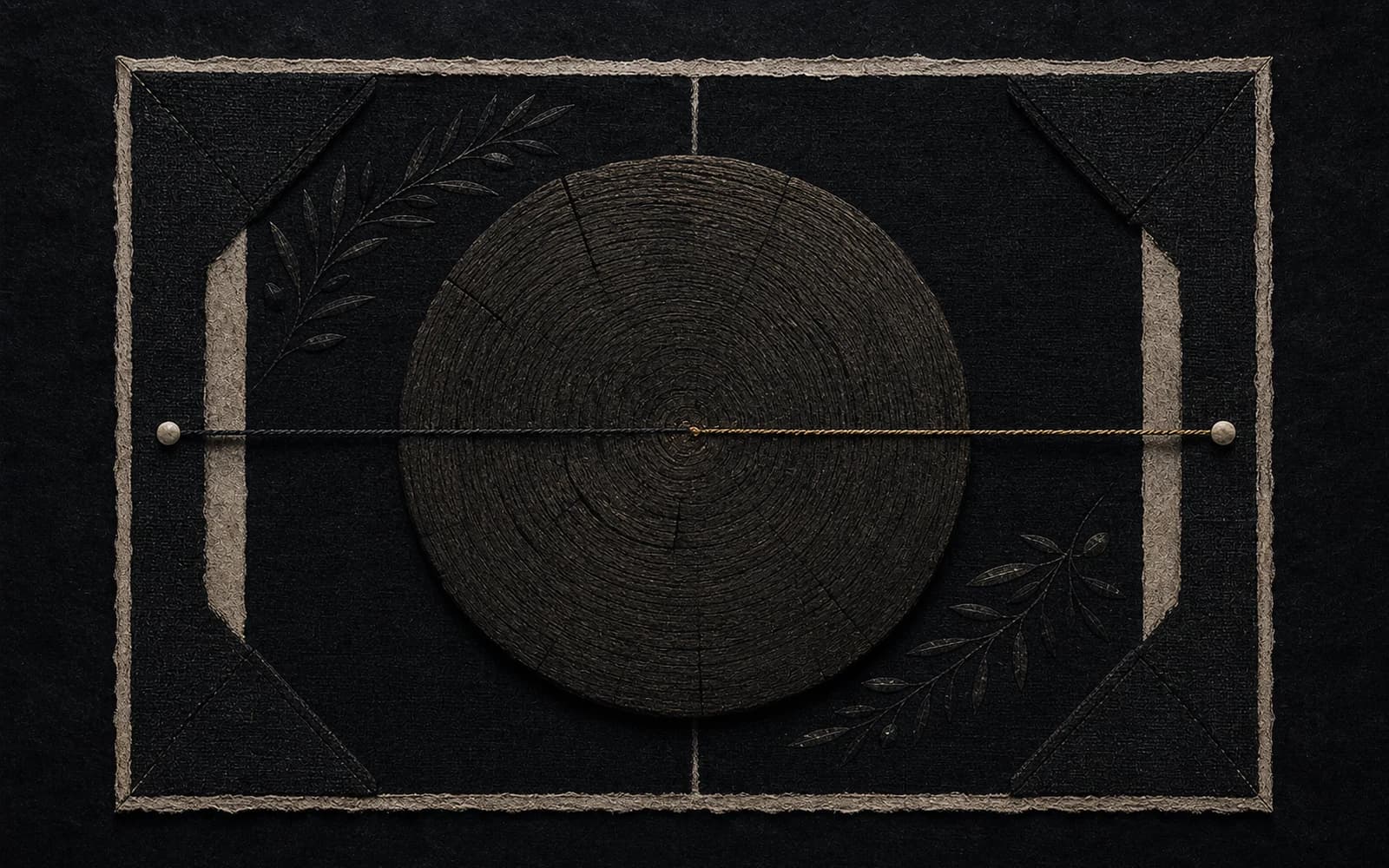
He then explains its construction. A living olive tree grew inside the courtyard. Odysseus built the bedroom around it, trimmed the trunk, shaped it into a bedpost, and completed the bed with inlay and straps. Moving the object intact would mean uprooting the foundation on which it was made.
That knowledge is the sign Penelope needs. It is not a general description a traveler might learn, a scar a nurse might remember, or a face a god might copy. It is the story of something husband and wife made the center of their private space.
The scene is examined closely in Penelope's bed test explained. Its power comes from joining metaphor to carpentry: the marriage is rooted, living, and strong, but it can still be destroyed by cutting through its foundation.
Recognition releases twenty years of grief
Penelope embraces Odysseus and explains her caution. She feared deception and recalls Helen, whose departure with Paris produced the Trojan War. Odysseus weeps too. Homer compares Penelope's relief to shipwrecked sailors seeing land, reversing the image that has defined her husband's journey: she is the one reaching shore.
Athena lengthens the night so they have time together. Their reunion is not represented as a single embrace erasing absence. They tell each other what happened. Odysseus recounts his wanderings; Penelope describes what she suffered among the suitors.
The exchange restores mutual knowledge. After twenty years, neither can simply return to the version of the other remembered from youth. Narrative becomes part of intimacy: each must learn the life lived beyond the other's sight.
Tiresias's prophecy remains unfinished
Odysseus tells Penelope that his travels are not entirely over. Tiresias instructed him to carry an oar inland until he reaches people who mistake it for a winnowing fan. There he must sacrifice to Poseidon. Only afterward will he receive a gentle death in old age, surrounded by prosperity.
This future prevents the bed scene from becoming a final retreat from the world. Home has been recovered, but consequence remains. Poseidon's conflict must be settled beyond the shore, and the suitors' families are already a nearer political threat.
The next morning turns toward Laertes
At dawn, Odysseus prepares to visit his father. He instructs Penelope to remain upstairs while he, Telemachus, Eumaeus, and Philoetius leave the city under Athena's concealment.
The decision leads directly to Book 24, where return expands again: from husband to son, from private bedroom to orchard, and from household victory to civil conflict. Book 23 gives the emotional reunion many readers expect, but it does not pretend marriage is the only relationship absence damaged.
Penelope's intelligence remains central. The intelligence of staying preserved the house for twenty years, and the bed test preserves the meaning of return at the final moment. Odysseus may take back public authority with a bow. He enters the marriage only when Penelope decides the evidence is enough.
Classics RediscoveredThe Odyssey Companion
We make the classics readable for modern adults. Independent and unofficial — every quotation is checkable by book number against Homer's text. Questions? hello@odysseycompanion.com
Free reading preview
Take the route, names, and recognition scenes with you.
Get the one-evening guide and a designed preview from the complete edition. Useful on its own; clear about where to go next.
Questions people ask
Why does Penelope test Odysseus after Eurycleia recognizes him?
Eurycleia's scar proves much, but Penelope has lived among rumors and knows gods can alter appearances. She requires evidence grounded in the bed's construction, known to the couple and to Actoris, the trusted maid who guarded their room, rather than public reputation or physical resemblance.
What is the secret of Odysseus and Penelope's bed?
Odysseus built the bed around the trunk of a living olive tree rooted inside the house. It cannot be moved intact. His knowledge of its construction proves that he is the husband who made their private room.
Keep reading
The Odyssey Book-by-Book Summary
A clear 24-book summary of Homer's Odyssey: Telemachus, Odysseus' wanderings, the return to Ithaca, and the ending.
Read →
Penelope's Bed Test in The Odyssey, Explained
How Penelope tests Odysseus with their immovable olive-tree bed, why he reacts, and how shared knowledge completes the homecoming.
Read →
How Does The Odyssey End? The Ending Explained
How the Odyssey ends, step by step: the disguised return, the contest of the bow, the killing of the suitors, Penelope's bed test, and the final truce.
Read →
Penelope and the Intelligence of Staying
Penelope in the Odyssey explained as strategy, sovereignty, memory, and the intelligence required to hold a home under pressure.
Read →
The Odyssey Book 24 Summary: Laertes, the Suitors' Families, and Peace
A clear Book 24 summary covering the suitors in Hades, Odysseus's orchard recognition with Laertes, retaliation, and Athena's imposed peace.
Read →