Scale and material
How Long Is The Odyssey IMAX 70mm Film Print?
The short answer
The IMAX 70mm release print of The Odyssey is approximately 11 miles long, according to the Los Angeles Times interview with Christopher Nolan. That figure describes the physical print used for the movie's 2-hour-53-minute presentation. It should not be confused with the 2.1 million feet of IMAX film that Nolan and cinematographer Hoyte van Hoytema exposed while shooting the production.
Format changes the encounter, not the source.
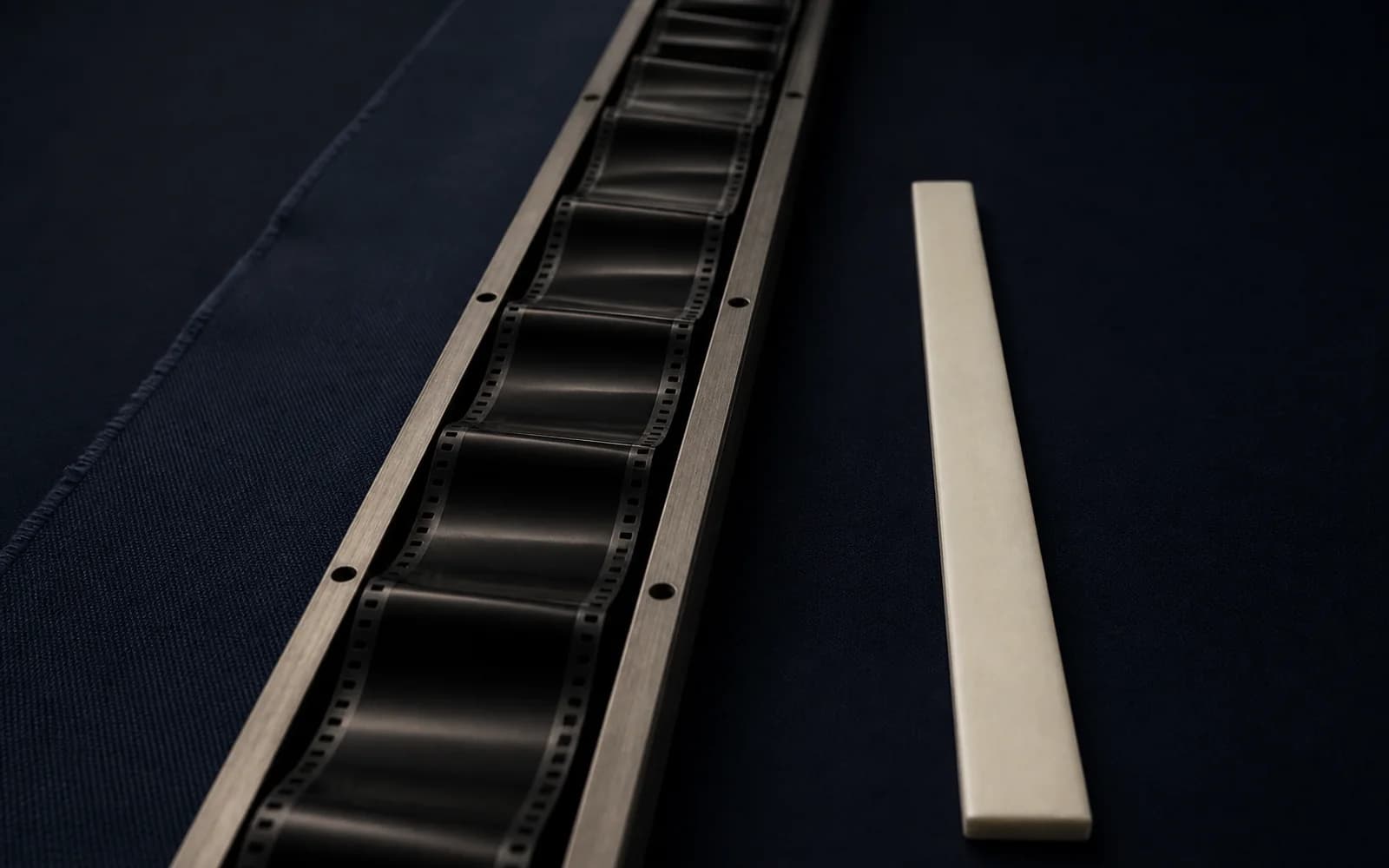
Lens, film strip, aperture, and physical texture clarify how cinematic craft shapes scale while Homer remains the deeper reference.
Updated August 1, 2026
Four things to hold onto
- The projected IMAX 70mm feature is approximately 11 miles of film.
- The reported movie runtime is 2 hours and 53 minutes.
- The production exposed 2.1 million feet of IMAX film before editing.
- Release-print length and camera-negative footage answer different questions.
The finished IMAX 70mm presentation of The Odyssey is approximately 11 miles of physical film. That striking number belongs to the release print, not to all the material photographed during production.
Keeping those two measurements separate explains both the scale of the projection and the much larger shooting ratio behind the edit.
Where the 11-mile figure comes from
In a July 7 interview, the Los Angeles Times reported that the film runs 2 hours and 53 minutes and that Nolan's preferred IMAX film version amounts to approximately 11 miles of celluloid.
This is the most direct published answer to the print-length question. "Approximately" matters: it is a reported physical-scale figure, not a claim that every assembled print has been measured to the same inch for the public.
The movie runtime guide covers the separate question of elapsed viewing time. The 11-mile fact translates that running time into the extraordinary physical object handled by an IMAX 70mm projection system.
Why the print is physically so long
The official format page says each IMAX 70mm frame has 15 perforations and moves horizontally through the projector. That large horizontal frame is what makes the 1.43:1 expanded presentation possible at equipped venues.
Most familiar motion-picture diagrams imagine film moving vertically. IMAX 70mm uses much more film area per frame, so a feature-length print becomes exceptionally long and heavy.
The 11-mile figure is therefore not a marketing metaphor for epic scale. It describes the approximate length of a real projection medium passing through specialized machinery over 173 minutes.
Our guide to why The Odyssey was shot on IMAX film explains why the format was used for faces, landscapes, boats, and intimate dialogue as well as action.
The 2.1 million feet number means something else
IMAX reported that Nolan and cinematographer Hoyte van Hoytema shot 2.1 million feet of IMAX film during production. That number is not the length of the finished movie.
It is the quantity exposed while making the film, before performances were selected, scenes were shaped, and the final cut was assembled.
The distinction can be stated simply:
- approximately 11 miles: the finished IMAX 70mm presentation reported by the Los Angeles Times;
- 2.1 million feet: the film stock exposed during photography, reported by IMAX;
- 2 hours and 53 minutes: the audience's running time.
Converting all three into one dramatic statistic would obscure their different meanings. Production footage measures capture; print length measures the finished physical presentation; runtime measures time.
Does every screening use that print?
No. Only a theater explicitly presenting IMAX 70mm film threads a physical release print through an IMAX film projector.
Digital IMAX uses a digital distribution file. Standard 70mm uses a different film format and print. Conventional digital screenings also use digital files.
That is why a ticket saying only "IMAX" does not establish that the venue has the 11-mile physical object. The IMAX 70mm versus digital IMAX comparison shows how to verify the label.
IMAX said 41 locations worldwide offered the IMAX 70mm presentation at opening. The format's rarity is partly logistical: each venue needs the print, compatible projection equipment, trained staff, and a schedule that can sustain the engagement.
What a projection booth must manage
Technical accounts of Oppenheimer show what a feature-length IMAX 70mm print can require. BFI documented 53 reels joined over 23 hours and custom extensions to its platter system. The Science Museum described the same reel count, a 16-hour assembly at its venue, a print roughly six feet across on the platter, and a clamp used to secure it.
Those reports concern Oppenheimer, not conditions at every Odyssey theater. They support a narrower operational inference: an approximately 11-mile IMAX 70mm print needs a properly equipped venue and staff trained to handle a large physical film object. Exact platter layouts, assembly times, and maintenance routines can differ by site.
That is materially different from distributing the same digital file to multiple auditoriums, but it does not make every film screening unstable or technically identical.
Why the number matters beyond trivia
The print length makes visible something digital projection normally hides: a feature film can also be a manufactured object with weight, surface, transport, and mechanical constraints.
For The Odyssey, that material scale fits the production's emphasis on real water, practical vessels, large landscapes, and an image designed around IMAX film.
Community discussions often repeat the biggest available number without distinguishing the finished print from the exposed negative. The accurate version is more interesting: millions of feet were photographed so that an approximately 11-mile final object could carry one 173-minute journey.
Keep production footage and release-print length separate
Say that The Odyssey IMAX 70mm release print is approximately 11 miles long, based on the Los Angeles Times interview.
Then add the necessary qualifier: IMAX's 2.1 million-foot figure concerns production footage, not the length of the finished print. That single distinction keeps an impressive fact from becoming a misleading one.
Classics RediscoveredThe Odyssey Companion
We make the classics readable for modern adults. Independent and unofficial — every quotation is checkable by book number against Homer's text. Questions? hello@odysseycompanion.com
Free reading preview
Take the route, names, and recognition scenes with you.
Get the one-evening guide and a designed preview from the complete edition. Useful on its own; clear about where to go next.
Questions people ask
Is the 11-mile figure the amount of film shot?
No. It describes the approximate physical length of the finished IMAX 70mm presentation. IMAX separately reported 2.1 million feet exposed during production.
Does every theater receive an 11-mile film print?
No. Only IMAX 70mm film locations use that physical presentation. Digital IMAX and other digital theaters play a digital distribution file.
Keep reading
Why The Odyssey Was Shot on IMAX Film
Why The Odyssey used IMAX film for every frame, how the new Keighley camera helped, and what 2.1 million feet of film means for Nolan's epic.
Read →
How Long Is The Odyssey Movie? Runtime and Reading Time
The Odyssey runs about 2 hours 52 minutes. Compare the confirmed feature length with cinema time and realistic ways to read Homer.
Read →
The Odyssey in IMAX 70mm vs. Digital IMAX: What Changes?
Compare The Odyssey in IMAX 70mm and digital IMAX: projection medium, expanded 1.43:1 image, venue availability, and what to verify before booking.
Read →
Source notes
- IMAX Corporation, production footage and IMAX 70mm release facts
- Los Angeles Times interview, runtime and approximate release-print length
- Official The Odyssey premium-format explainer
- Science Museum, projectionist's technical guide to assembling an IMAX 70mm feature print
- BFI, documented assembly and platter modifications for an IMAX 70mm feature print
- r/ChristopherNolan discussion, used only as evidence of viewer curiosity