Scale and material
The Odyssey in Standard 70mm vs. IMAX 70mm
The short answer
Choose IMAX 70mm if you want The Odyssey's full 1.43:1 expanded image and can reach a confirmed film venue. Standard 70mm is still a genuine photochemical presentation, but it uses different framing and does not reproduce the 15-perforation horizontal IMAX frame. The better practical choice depends on verified format, screen quality, seat, travel, and availability.
Format changes the encounter, not the source.
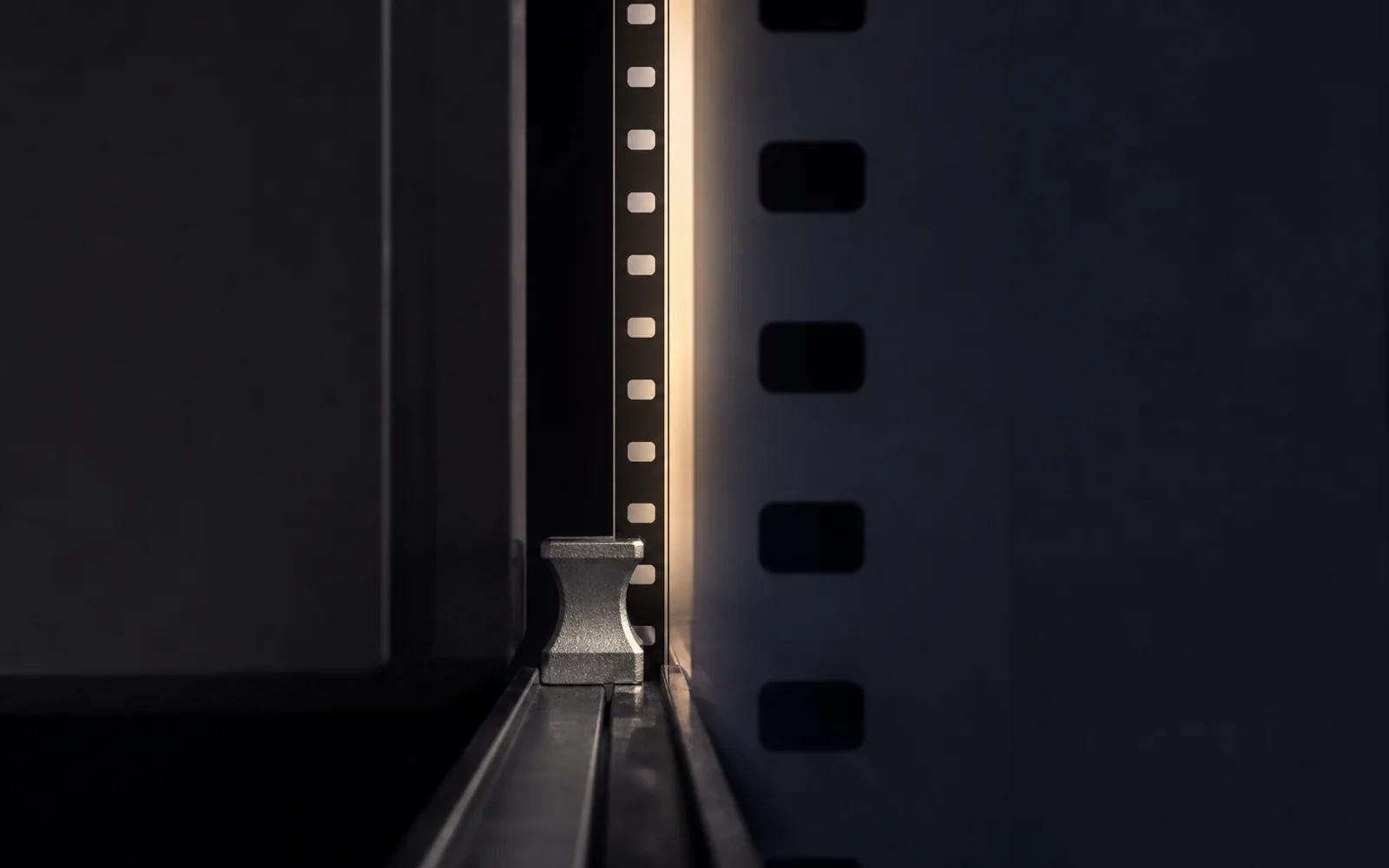
Lens, film strip, aperture, and physical texture clarify how cinematic craft shapes scale while Homer remains the deeper reference.
Updated August 1, 2026
Four things to hold onto
- IMAX 70mm presents the film in the official 1.43:1 expanded aspect ratio.
- A standard 70mm listing is a separate film format, not shorthand for IMAX 70mm.
- Both can offer a photochemical presentation, but their frames and theater systems differ.
- Confirm the exact format label and venue setup before paying or traveling.
Standard 70mm and IMAX 70mm are not two names for the same screening. Both put physical film through a projector, but they use different frames, framing, and theater systems.
For The Odyssey, IMAX 70mm is the only one of the two that presents the official 1.43:1 expanded composition. Standard 70mm remains a legitimate film option, not a defective substitute.
What the IMAX 70mm label guarantees
The official format page says every frame of The Odyssey was photographed with IMAX film cameras. At an IMAX 70mm location, each projected frame has 15 perforations and travels horizontally through the projector.
That presentation can use the 1.43:1 expanded aspect ratio. In selected scenes, viewers see more image above and below than they do in the wider versions prepared for other formats.
IMAX also describes this release as the first feature photographed entirely with IMAX 70mm film cameras. Its opening-weekend statement identified only 41 IMAX 70mm locations worldwide, which explains why the label carries both technical meaning and scarcity.
Our IMAX 70mm versus digital IMAX guide explains the separate question of film projection versus digital IMAX.
What standard 70mm means here
A theater listing that says "70mm" without "IMAX" identifies a different film presentation. It should not be read as a shortened version of "IMAX 70mm."
The standard 70mm presentation does not project the 15-perforation horizontal IMAX frame. Its framing is therefore different from the official 1.43:1 IMAX 70mm version.
That distinction does not make standard 70mm fake or automatically inferior. It still offers the texture, slight variation, and physical continuity of a projected film print. A well-maintained standard 70mm auditorium with a strong sound system and a good seat can be more satisfying than a compromised trip to a badly positioned IMAX seat.
The careful language is important: format specifications tell you what a system can present, not whether a particular projectionist, print, screen, or seat will produce a perfect show.
What changes in the image
The central difference includes the shape and amount of the photographed image, not just screen size.
The official film site labels the IMAX 70mm composition at 1.43:1. It also warns that its online comparison illustrates framing; it does not model real-world screen dimensions, which vary by theater and projection setup.
That warning prevents a common mistake. A taller frame on a webpage does not prove that one local auditorium is physically larger or better maintained than another.
The practical comparison is:
- IMAX 70mm: the rare 15-perforation film presentation with access to the 1.43:1 expanded frame;
- standard 70mm: a distinct film print with wider framing and broader venue availability;
- digital IMAX: a digital presentation whose aspect ratio and projection system depend on the auditorium.
See why the movie was shot on IMAX film for the production logic behind the expanded frame.
Which version should you choose?
Choose IMAX 70mm when the full expanded composition is your priority and the ticket explicitly confirms the format. It is the closest match to the presentation emphasized by the filmmakers and IMAX.
Choose standard 70mm when you want physical film but cannot reasonably reach one of the rare IMAX 70mm venues. It is also sensible when the standard auditorium offers substantially better seats, travel, accessibility, or scheduling.
Do not choose from an unlabeled thumbnail or an aggregator's generic "premium" badge. Open the theater's own checkout and inspect the exact session.
The IMAX 70mm venue guide is a useful starting directory, but live ticket inventory remains the final evidence.
A five-point ticket check
Before paying, verify five details:
- Does the session say "IMAX 70mm," "IMAX film," or simply "70mm"?
- Does the theater identify the auditorium and projection type?
- Is the screen capable of the 1.43:1 presentation advertised for IMAX 70mm?
- Is the available seat good enough to justify the format?
- If travel is involved, has the venue confirmed the session directly?
Interest in rare-format shows is visible in community discussions, but those threads are evidence of demand, not technical documentation. Use official format information for the distinction and the venue for the booking.
Choose by frame, venue, and first-viewing priority
IMAX 70mm is the technically distinctive presentation because it can show the full 1.43:1 expanded frame from the film's IMAX photography. Standard 70mm is a different, still worthwhile film experience.
The strongest choice is not the most impressive label in isolation. It is the best verified combination of format, theater, seat, schedule, and travel that you can actually attend.
Classics RediscoveredThe Odyssey Companion
We make the classics readable for modern adults. Independent and unofficial — every quotation is checkable by book number against Homer's text. Questions? hello@odysseycompanion.com
Free reading preview
Take the route, names, and recognition scenes with you.
Get the one-evening guide and a designed preview from the complete edition. Useful on its own; clear about where to go next.
Questions people ask
Is standard 70mm the same film print as IMAX 70mm?
No. They are distinct exhibition formats. The official IMAX presentation uses a horizontal frame with 15 perforations and can show the 1.43:1 expanded composition.
Is standard 70mm a bad way to see The Odyssey?
No. It remains a film presentation and may be the stronger practical screening when its theater, seat, sound, or location is better. It simply is not the full IMAX 70mm frame.
Keep reading
The Odyssey in IMAX 70mm vs. Digital IMAX: What Changes?
Compare The Odyssey in IMAX 70mm and digital IMAX: projection medium, expanded 1.43:1 image, venue availability, and what to verify before booking.
Read →
Where to Watch The Odyssey in IMAX 70mm
Find current IMAX 70mm screenings of The Odyssey, understand the 41-location release, and verify the exact film-print showtime before traveling.
Read →
Why The Odyssey Was Shot on IMAX Film
Why The Odyssey used IMAX film for every frame, how the new Keighley camera helped, and what 2.1 million feet of film means for Nolan's epic.
Read →